
The golden rule of family history is to begin with what you know for certain and move backwards, one generation at a time. It is tempting to leap straight to a famous name or a distant century, but that is how people end up with entirely the wrong family.
You also do not need to spend anything to begin. Your own family holds more than you think, and some of the best record sites are free.
- What you already know: names, dates, places
- Older relatives to ask
- Any old certificates or photos in a drawer
- A free account on a tree site, or a paper chart
The five steps
Write down what you know
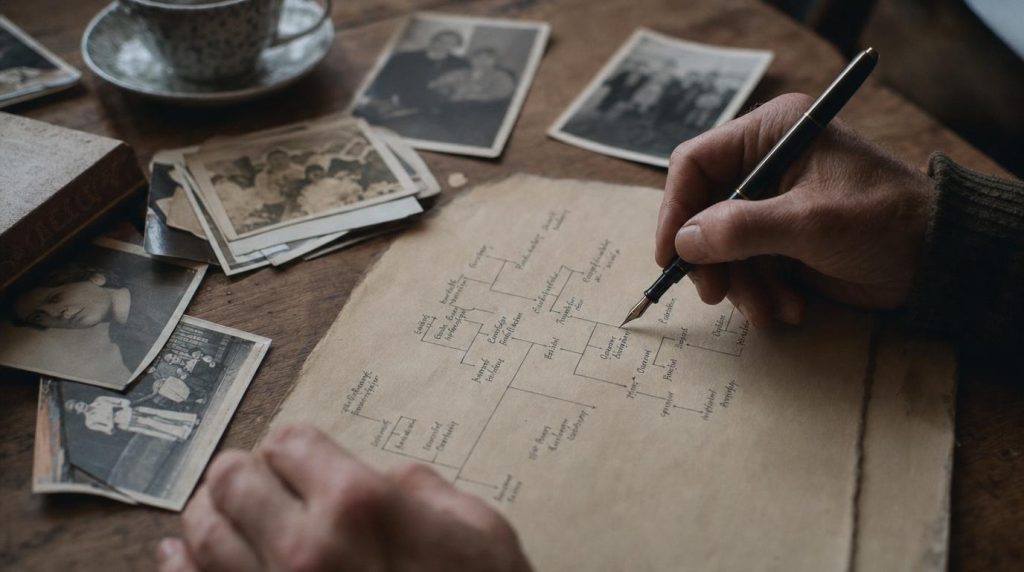
Start with yourself, your parents, and your grandparents. Names, dates, and places of birth, marriage, and death. This is the trunk that everything else grows from.
Ask the family first
Before you pay for anything, mine your own relatives. Older family members, the backs of photographs, the family Bible, and old certificates in a drawer can hand you two or three generations for nothing.
Put it into a tree
Record it as you go. A free tool like FamilySearch or Ancestry keeps your tree tidy and backed up, though a simple paper chart works perfectly well to begin with.
Prove each step with a record
A name in someone’s memory is a clue, not a fact. Confirm each birth, marriage, and death against a real certificate or record before you build the next branch on top of it.
Work on one line at a time. Chasing every branch at once is how people get overwhelmed and give up. Follow one surname back as far as it goes, then start the next.
Then go further online
Once you have wrung your family dry, the big record websites let you push back into the census, parish registers, and beyond. Our guide to using genealogy sites shows you which to use for what.
Three things that save grief
Start free. You can get a long way without spending a penny. FamilySearch and the Free UK Genealogy sites are free forever, and a great place to begin.
Do not trust hints blindly. The websites suggest matches and copy from other people’s trees. Treat them as leads to check, never as facts to copy. Family trees are full of the same repeated mistakes.
Note where it came from. For every fact, write down the record it came from. Future you, and everyone who inherits the tree, will thank you for it.
Common questions
Do I have to pay for Ancestry or MyHeritage to start?
No. Begin with your own family and the free sites like FamilySearch. Only pay for a subscription once you know which records you actually need, and use the free trials first.
I have hit a dead end. What now?
Genealogists call it a brick wall, and everyone hits them. Try alternative spellings, look at siblings and neighbours rather than just your direct ancestor, and check whether the records for that place and time even survive. Sometimes a different record set is the way round.
How do I record it all so it is not lost?
Keep your tree on a site that lets you export it, and back up that export. Our guide on 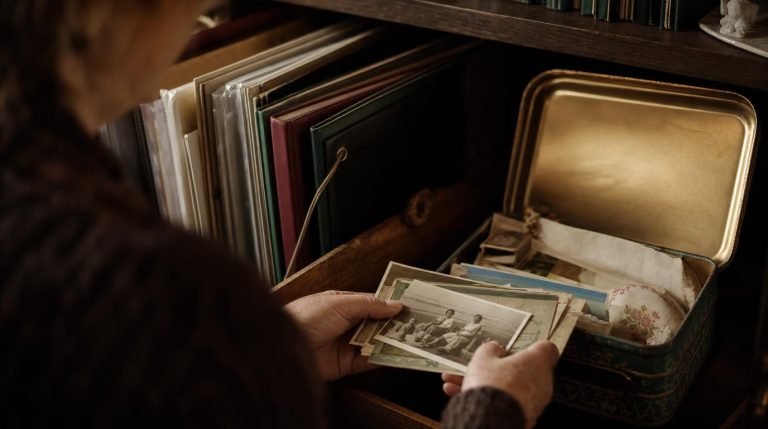 building a family archive covers keeping your research safe.

