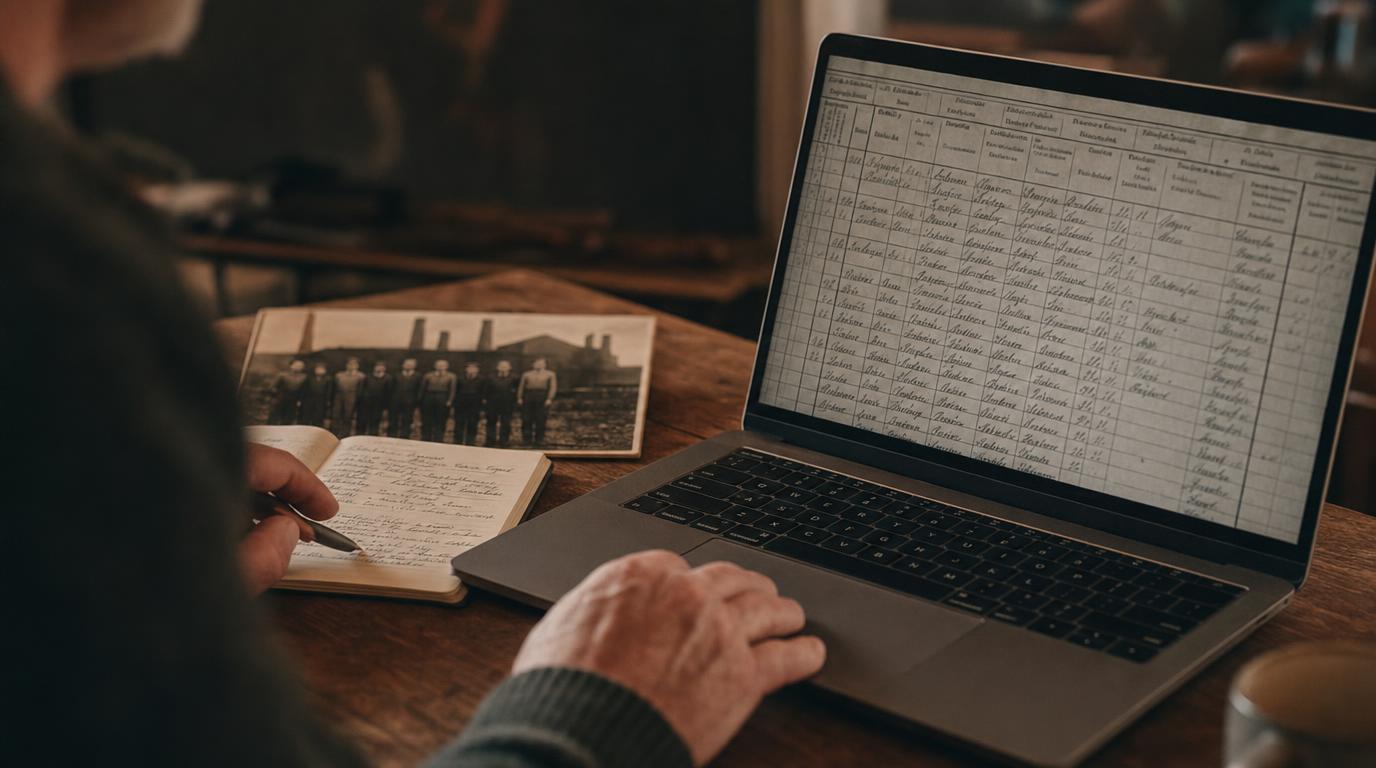
These sites hold digitised copies of the records that mark out a life: births, marriages, deaths, censuses, parish registers, military papers, and more. Some are free, run by volunteers. Others are paid, but nearly all offer a free trial.
There is no need to subscribe to everything. Start with the free sites, work out where your family’s records live, and only then pay for the one site that holds them.
- The names and dates you have gathered so far
- A free account to begin
- Patience with old spellings
- A budget only once you know what you need
Which site for what
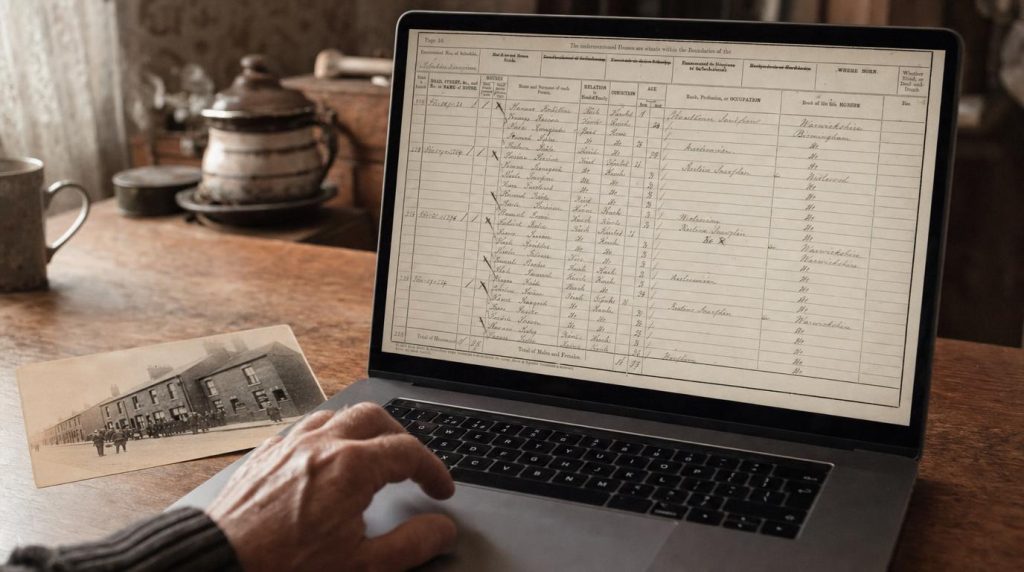
Start with the free two, then reach for a paid site only when you know your records live there.
| Site | Best for | Cost |
|---|---|---|
| FamilySearch | A vast, global index of births, marriages, deaths, plus UK parish and census records. Start here. | Free |
| Free UK Genealogy | FreeBMD, FreeREG, and FreeCEN: civil records, parish registers, and censuses, all volunteer-transcribed. | Free |
| Ancestry | The largest collection anywhere, with billions of records and strong hints. Best all-rounder. | Paid, free trial |
| Findmypast | The strongest British and Irish records, including newspapers and military records. | Paid, free trial |
| MyHeritage | European records, non-US DNA matches, and photo tools that restore and colourise. | Paid, free trial |
| TheGenealogist | English parish and church records, with some sets you will not easily find elsewhere. | Paid |
Searching well
Use the free trials. The paid sites offer a fortnight free. Line up your searches in advance, then work through them in that window before deciding which subscription, if any, is worth keeping.
Search loosely, then narrow. Spelling was flexible in old records. Begin with fewer details and wildcards, then tighten up. Too much detail hides the very record you are after.
Always open the original. The typed-up transcript can be wrong. Click through to the scan of the actual record and read it yourself before you trust what it says.
Common questions
Which one paid site should I choose?
For British and Irish ancestors, Findmypast is often strongest; for the widest global reach and the best hints, Ancestry. Use the free trials on both with the same searches and see which finds your family, then keep only that one.
Do I need a DNA test?
Not to build a tree from records. DNA can help break through brick walls and find living relatives, but the paper records are the backbone. Start with those; consider DNA later if you get stuck.
Why can I not find my ancestor?
Try alternative spellings, search for their siblings or spouse instead, widen the date range, and check the record even survives for that place and year. Old records are patchy, and the transcriber may have misread a name.