Dr Karamat Iqbal
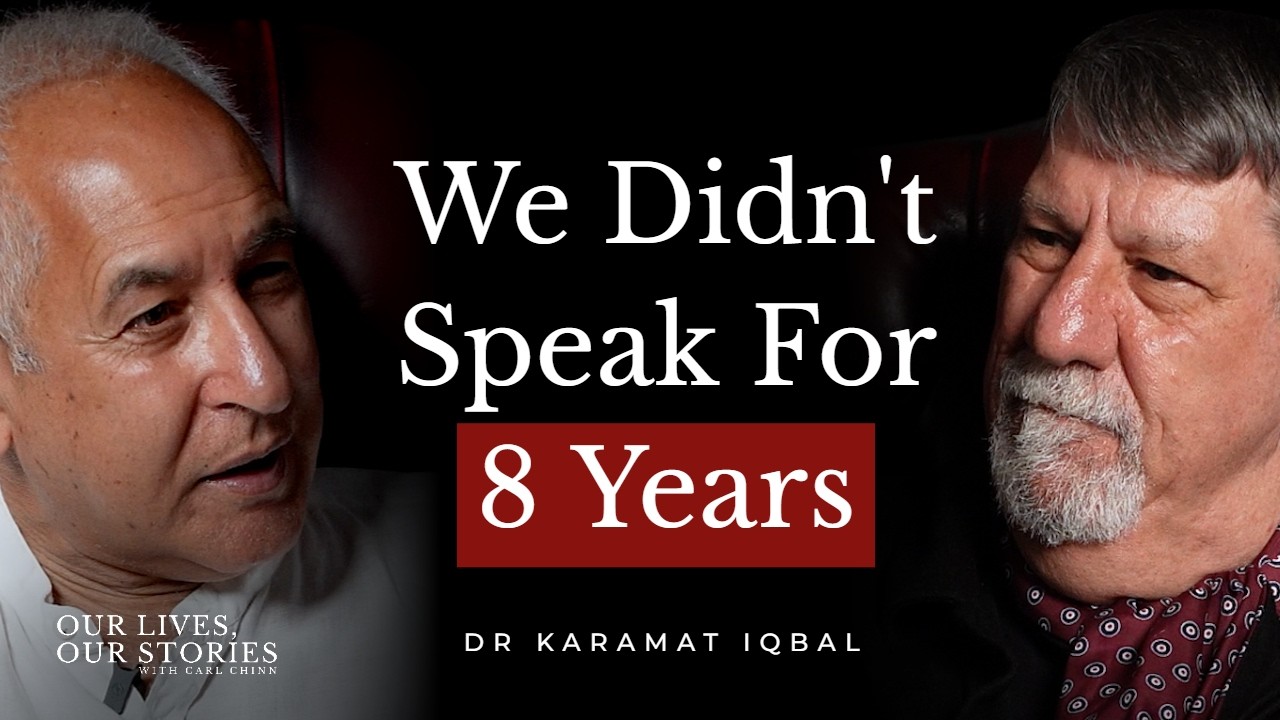
Dr Karamat Iqbal is an educator, historian and diversity consultant who was born in Kashmir and has lived in Birmingham since 1970. He has worked in education and equalities for over 45 years, pioneering early services for South Asian communities, and drew on his doctoral research for the book British Pakistani Boys, Education and the Role of Religion. He also wrote Dear Birmingham: A Conversation With My Hometown and leads on education at the Birmingham Race Impact Group.
In this episode
Carl and Karamat share a love of history and use it to open up Kashmir's story: how the British sold the land and its people for 75,000 rupees in 1846, why migration to Birmingham, Bradford and Luton runs back more than a century, and what partition did to the villages around Mirpur. Karamat speaks about arriving as a boy, slowly falling for Birmingham even while feeling unwanted in it, and the eight years he spent estranged from his parents. Underneath runs the meaning of his name and a life given over to learning and building bridges.Find out more: Our Pioneers
Transcript
This transcript is auto-generated and may contain errors. Tap a timestamp to jump the video.
As children, we used to love the rainsbecause you know what it meant? It meanta day off school. I was slowly fallingin love with Birmingham. All theexcitement, the diversity, the things ithad to offer. Not only am I an immigrantin a foreign land, I'm also in a spacewhich is hostile and I'm not wanted. 8years I did not speak to my parents.Welcome to our lives, our stories. Andtoday I'm really privileged and pleasedto welcome Dr. Kraat Ikbel. Now we'vegot such a lot in common. He's made a
big journey in his life from Mapur andKashmir to Birmingham. But we have a lotin common. And KMAT is an educator, abuilder of bridges, a writer, andsomeone whom I admire. And I know we'regoing to learn a lot from him. KMAT,thank you for joining me today.>> Thank you, Carl. Um, it's a it's aprivilege to to be here in conversationwith you. Um, if my parents were alive,they would be very proud that uhsomebody as important as you is havingme uh in in conversation uh with youlike this. Uh so, thank you. It's it's a
privilege and an honor to, you know,you're somebody I've um grown up with.um you know and um for many years I'dheard of of you and then I started to uhread and learn and re read some of yourwriting and um uh and recently we'vebeen meeting.>> Yes.>> And uh so it's my privilege to to behere. Thank you.>> Thank you.>> May I ask you what the name Katikbalmeans?>> Kromath means miracle. Right.>> I have big responsibility. I think it isprobably Persian farum and um
I believe means the learned one uh whichwhich again is [laughter] a bigresponsibility.>> Your mom and dad knew what they weredoing when they named you.>> It just happens that I love learning.Both names take me actually to thebeginning because fzy is a language usedin Afghanistan and was used a lot inPakistan and India in Iran obviously thePersian language. Arabic is the languageof people who belong to Islam. Tell meabout where you grew up and what yourchildhood and youth was like. Well, Igrew up in in what is um called AzabKashmir.Um we essentially
Kashmir is occupied by India. Uh 2/3 isoccupied by India and one/ird isoccupied by Pakistan. And I like manymaybe 2/3 3/4 of Kashmirisuh from Azad Kashmir umor or or people who say they arePakistanisactually come from Azad Kashmir uh thePakistani occupiedKashmir and that's where I where I grewup and this takes us back to partitiondoesn't it when the people of Kashmirwanted to become their own state but
India and Pakistan took over differentparts of it>> for 99 years beforeum Kashmir had been sold by the Britishwho had won it in a in a in a war andthey didn't want to hang on to it sothey decided to sell it what they didwas they sold the landfor 75,000 rupeesum And they said nothing about thepeople.And of course the people who were buyingKashmirassumed they own the people. So it wasnext worst thing to slavery. People wereuh handed over. The land was handed
over. So for 99 years from 1846to 1947the dogas were in controlof Kashmir and the people and then whenthe British left in 1947um there was a war over Kashmir and umonethird ended up being occupied. It wasfreed from supposedly Indian control butoccupied by Pakistan andso where the dog left Pakistan took over>> right
>> and that is the current situation. Sodescribe to me that part of Kashmir thatyou grew up in most around Nepur. Is it>> district Meipur?Um and Dasil Dial. Dasil is subdivisionand I would say Mapur and within MeurDial is probably the epicenter of uhKashmir migration to the UK toBirmingham,Bradford, uh Luton, Olden, lots of majorcenters of population where there therewas work people came. Did that migrationbegin because the British got a contract
to build the huge Mangala Dam?>> No. Um that is a misunderstanding.>> Right.>> The migration goes back over a hundredyears and essentially people camebecause they were poorand the government uh at home wastyrannical. There was oppression. Uh butessentially they were poor. They couldjust about survive on what they wereable to get from the land.>> Yeah.>> Maybe 3/4 of of a year. For the restthey had to go away. And when theBritish were there, Kashmiris went intothe uh into the wider India for work.
When the British left and India andPakistan became two separate nations anduh Kashmir became divided,our bit of Kashmir could no longeraccess the work opportunities in uh inIndia and they decided to come here. Uhbut before that they were they would begoing on the ships. Um uh you you willhave heard of the term Lascar. These arethe merchant seaman.>> So many of them were merchant seammen.They were in the first world war uhsecond world war. Um and then after thesecond world war many of them stayed.Many of them jumped ships. Um and then
after second world war many people camebecause there was work opportunitieshere. Rebuilding Englandwas very much uh needing uhsemi-skilled but unskilled labor andmany of the Kashmiris have filled filledthose>> the the pioneers of the Kashmirimigration of the Cleti migration fromBangladesh of the Yemeni migration fromYemen were these men Lascars who weremerchant semen who brought vitalsupplies to Britain from India presentin Pakistan and Bangladesh as well inboth world wars.>> I um have been researching the historyof Kashmir migration and obviously
people came uh a long time ago but interms of hard evidence I have somebodyuh by the name of Muhammad uh GMA uh whocame just around the first world war. Hewas actually in in first world war and Ihave his medals um through his grandson.He then uh after the first world war hesettled in uh in in the Midlands. Heworked in a foundry in in Smemedic andum I have other people who came in the1920s. There was a uh a famous uhKashmiri by the name of Zaman Ali whohelped with the building of the central
mosque.>> He lived in Bolar. He came in the 19 uhmid mid 1930s and he met his future wifeMargaret who had come from Scotlandbecause of course many of the migrantswere not just coming from othercountries but nearer home they werecoming from Scotland>> South Wales>> Wales many of the countryside peoplewere coming to the big cities for jobsmany of the Irish camein the mid30s uh and then there was avery large number who came uh in the inthe 40s and and certainly after thesecond world war.>> Now let's go back to Kashmir to Mapur todo. Did I pronounce that correct?
>> Yes.>> And Daniel where did you grow upexactly? What kind of life did you havethere? If I can explain that if I hadnot come to England, I would have goneto high school in center of Dialand that would have been a 2hour walkuh from our village because in thosedays you walked everywhere. There wereno roads, no electricity, no runningwater, um no radio, TV, anything likethat. the school I did attend first myprimary school was uh half an hour'swalk across a ravine um and then uh 5years later I went to a secondary school
and that was an hour and a half's walkacross two ravines imagine on a hot dayyou're walking an hour and a half toschool and an hour and a half back andanother year or so at that school Iwould have left it and then gone to highschool in Dial. So, Dial for me was a2-hour walk away from our village. Anduh that was the world I grew up in. Andit was a very happy childhoodvillage of maybe 10 houses on top of auh kind of a mound. And all around itwere uh fields and and at at a distance
you had the um uh hills. Um and furthera field you could see on a on a clearday you could see the Himalayas. Whenthe when the snow was melting and thesun was shining you could see it fromour house. Other than the 10 houses wehad it was fields, animals. The wholevillage was your family. the wholevillage was your community and uh youwere brought up by by the whole village.You know the saying it takes a villageto raise a child. Well, I was brought upin that kind of environment and uh youtrusted everyone and that was yourworld. I was there until I was 12 13.
Age is always approximate where I comefrom because they never in those dayswrote down when you were born. Those 1213 years that I I spent were in a veryhappy environment, very safe world. Forexample, when I went to school, I wasnever taken to school by my elders. Ijust went with the other children>> from an early age.>> From an early age, I was never taken bymy parents. So, primary school, I walkedwith other children. Secondary school, Iwalked with other children.>> This ravine that you crossed over, whatwhat kind of bridge was it?>> Well, there was no bridge. You you wentdown,>> right?>> Crossed the other side of the water. Andthere wasn't much water
except when the rains came.>> Yeah.>> And as children, we used to love therains because you know what it meant? Itmeant we couldn't cross. It meant a dayoff school. I used to um go to theravine and just stand on our side of thewater and see it. and because you knowit it was very powerful um and um almostlike flooding and um and and verypleased that there was no school thatday.>> Tell me about your mom and dad and yourfamily.>> Mom and dad were decent people,respectable. There's a saying safad pouh which is people who don't have much
money but behave as if they are quitewealthy respectable and ours was a veryhospitableuh family home. So if you were hungryand thirsty you would show up at ourhouse and you would be fed and you wouldbe watered. And if you were poor and youdidn't you couldn't afford to eat or youcouldn't afford to drink, remember thewater, we had to go and fetch it from aa a natural well. Yeah.>> So if you were thirsty, if you werehungry, you would show up at our houseand um uh so mom and dad were uh decentpeople and um uh I was I was brought up
in that loving uh loving environment.How did they make a living?>> Back in the day when I was born, forexample, uh in in in in the 50s,actually on the day I was born, myfather was not there because he used tohave a donkey and he used to transportpeople's goods on his donkey. Um andremember there were no no roads forvehicles. further field on the flatlands you could use camels but uh on theon the local area the only animal thatwould uh be suitable was a donkey>> cuz it was more hilly.>> That's right. And um my father had adonkey and he he would spend months away
from home. So that's what he was doing.We had land uh and we we got some youknow made a living from the land uh butit wasn't enough.>> So was your mom looking after the landwhile your dad was away?>> That's right. And then my father came toEngland in 1957.So I was just one one and a half when hecame to England and he was in Birminghamfor 5 years. He was part of the pioneeruh generation in our family in ourcommunity and um uh he he worked in afactory in in Birmingham and um he sentmoney back. Ours was the first brickhouse built in our village because all
the houses were built with local stone.Um, and ours was the first brick houseto be built with the English money thatmy father had sent. You know, you kindof feel feel special.>> Yeah.>> Living in in in this brand new house,you know, not not everyone went toschool. Not all the children went toschool because parents couldn't affordthe books. Also, the parents wantedtheir children to uh stay at home andhelp them on the land. I was veryconscious that some of my friends who Iwas growing up with I went to school soduring the day I didn't see them butthey didn't come to school with me and Ilater realized that I was a lucky one.
>> Yeah.>> My parents could afford the books andthe uniform. Twice a year you had tohave uniform. there was the summeruniform and the winter uniform and ofcourse that was costly uh for the poorpeople so they they didn't send uh thechildren to school so I felt veryprivileged uh to be going to school andI had a love for learning in fact uh myearliest memory was going to school withmy older cousin and I went to the schooland they said you can't stay you're notold enough and they sent me home whilemy cousin stayed be about four or five.
Yes. And the reason I remember it isbecause I was scared on the on thejourney home on my own. uh all thebushes and all the trees and uh the theravine I had to cross and I was onlyfour and um you know it stuck with meand that did show me uh that I must havewanted to go to school at such an earlyage. So as soon as I got old enough Iwent to school. One time I decided toplay truent. I developed this uh tummyache. I could show you a picture ofwhere I was in the ravine. I would getthere with the other kids and I would
put my hand on my stomach and pretendthat I I had stomach ache and all theother boys cuz it wasn't the girlsdidn't go to school. This was a boyschool. All the boys would say, "Oh, youbetter go home then." And I went home onthe first day. I tried it the secondday. Exactly the same spot. I developeda stomach ache and on the third day Idid the same and I went home and myfather came uh he was obviously at hadcome back from England and he heard frommy mom that I was not feeling well andum he came and he said to me come come
with me and I thought well I'm I've gota stomach ache he's obviously going totake me to theSo he started to walk and I followedhim. We got in the bottom of the ravineand there was a particular space in theravine where you had to turn right to goto the doctors and turn left to go tothe school. And he turned left and Ididn't have the courage to say to him,"You're going going the wrong way. Thedoctors the other way." But I I I wastoo afraid to point it out to him. Andof course he he had his plan. He took meto school. He went and spoke to theteacher. I went and sat with my mates in
the normal way in the class. And hespoke to the teacher. And you know tothis day he's obviously died now. Inever discovered what he said to theteacher and he never said anything tome. But it did the trick becausenever in my life did I ever missa class. Even now I'm an old man. If Igot to go to a class, I'll be there, youknow. and and um so I had this lover forlearningthese encouraging parents who valuededucation. I did very well at school. I
was always I if not the top student inthe in the exams. I was the second orjoint second in the primary school. ThenI went to secondary school. My dad wasMuhammad Ikbal but um everyone calledhim Sufi because he was a a religiousman butnot religion where you ram it downpeople's throat>> but a religion that is loving, caring,gentle that leads you to do good in theworld. people would come to him foradvice and um if there was a disputethey would ask him to intervene and mymom was wum
in our language means England or aforeign place and you know I discoveredwhen my father diedshe took on the responsibility of beingthe respected person that people travelto for advice and and when she died Ihad the mostprivileged feedback from one of the menin the village. He said, "Cromoth, I Ihave to tell you this that your momafter your father died in this part ofthe village, she was a woman, but shewas also the man." And we traveled long
distancesfor her advice. And if there was adispute, just like we used to travel toseek advice from your father, we nowtraveled to seek advice from yourmother. They are the two people who lefttheir legacy.>> Your dad was away for 5 years. He leftwhen you were about 15 months, 18 monthsold. What was your first memory of yourdad when he came home? Well, actually myfirst memoryof him in while he was away,I knew he had gone to Englanduh which was a a very So I formed animpression of what England was like.
>> Yes.>> And I I uh formed this impression thatEngland was a special place because hesent me a pen, an ink pen. And Iremember it because what I did was Ipulled it apart and I got all the ink onmy clothes and obviously destroyed thepen, but he had sent it to me fromEngland. And the other thing I rememberis our house being built while he was inEngland and I was told that uh the moneyhad come from my father. So I thought hewas a very special man, gone to a veryspecial place to help us build thishouse and send send me a pen. So when it
came for me to come to England, Ithought I was going to a special place.>> Well, you were an only child, KMAT.>> I was the only son uh because in ourculture um the daughters uh leave thefamily home to go uh with their husbandwhen they get married. The son stayswith the parents and when he getsmarried he brings his wife and and so hetakes over the house. So the son uh hada special special place. So I I felt youknow as as the only son I was uh kind offeeling special from a previous uhmarriage. My father had three daughtersand they were like my u my mothers. one
or two of them were similar age to mymom and um and then uh I was born andthen after me we had two two youngsisters and um uh so they all brought meup so as the only boy uh so you know Iwas I felt quite special um of courseit's feeling special because I had myparents who people respected uh I wentto school um I was obviously fortunateforunate to to be able to eat uh regularmeals, wear clothes, wear shoes becauseit was a world where there was poverty.Uh some of the children, you know, who
[clears throat] didn't go to school, forexample, sometimes they they didn't haveshoes. Uh sometimes they didn't havefood to eat in their own uh families.And uh that was the kind of world thatwe we had to leave in order to migrate,you know, uh far away lands.Excuse me for interrupting theconversation, but I just wanted to getacross how important it is that everyonetells their story because everyone has alife and everyone has stories to tell.Now, you can do this in different ways.You can use your mobile phone. You canget somebody writing down theirmemories. You can get a collage ofphotographs with stories around them. Orelse, if you're struggling to getstarted, we have a free guide on our
website. And I've also brought out thisbook, My Life, My Story, a guided legacyjournal. There's an introduction by me.There's questions and really prompts foryou to think about that can move thatstory forward and get those memoriesdown.Did your dad tell you anything aboutEngland when he came back and aboutBirmingham?>> I don't think so. UmII don't remember any any conversations.I I picked up bits and pieces uh fromfrom other people.>> Yeah.>> I remember for example hearing about umsomebody called Muhammad Ali>> and um later I discovered it was the
boxer who who was famous and I remembermy uncle talking about him. you know, inEngland, they'd seen this this guycalled Muhammad Ali who was a boxer anduh how how he was fighting. Uh I I hearduh some stories about racism.>> Yeah,>> there were some uh nasty people who wereracist towards Pakistanis and Kashmirisuh in in in Birmingham and in England. Ialso heard that you know there therewere many nice people as well. Uh so yesbits and bits and pieces.>> Your dad comes home. Does he stay inKashmir for a while?>> People were allowed to stay in Kashmirfor 2 years up to two years.
Not anymore. My father came back fromBirmingham and um he had an accident inhis last few days before coming toEngland and which meant that he hadoverstayed and so he did eventually cometo uh London uh but he was turn turnedback they said you you've um overstayedand because of of his accident he hadstayed longerAnd so when he did come to to to London,he was turned back and so he he could nolonger come to England.>> How did you get to England?>> I'm the only son and uh I'm thetherefore the future. I'm the social
security uh for the family. Uh becauseremember when I grow up I'm going to betaking over the house uh and keep theparents. There's no no welfare system oranything like that. And it was a it wasa land where there weren't many workopportunities. And of course my fatherhad been to England uh himself and knewwhat there was here. There was educationand and work opportunities. They decidedthat they wouldn't be able to give mevery much in Kashmir. Um and theydecided to send me to England. I had asister, one of my older sisters wasmarried and was living with her husbandin Nichols and uh so they put me on a
plane at the age ofmaybe 12 to 14. I arrived in Nichels.>> What languages were you speaking at thisstage of your life?>> That's quite a quite aa complicated situation. we speak a um alanguage which in in those days didn'thave a name. Now we call it Bahari. So Igrew up speaking Bahariuh at home. So for the first 5 years ofmy life before I started school I wasspeaking this language which was mylanguage. Um we sometimes call it up zanour language. As I said, it didn't havea a name in those days, but we it it
does have a name now. And I went toschool and they said, "No,that language doesn't count. You have tolearn Udu, which is the nationallanguage of Pakistan."So, I learned Udu, which at times feltlike a foreign language. It was a bitlike uh being a strong black country uhspeaker or Jordium or some other you know maybe Welsh.You grow up speaking Welsh.>> Yes.>> You go to school and they said no Welshis no good. You have to speak English.You have to learn English. So I was toldI had to learn udu. So I learned udu.The teaching was all in udu. So for 5
years I learned udu and then after 5years I went to secondary school andhere not only did I learn udu I learnedEnglish I learned far I learned Arabicand these were all different languageslike other subjects like geography andhistory and science. So age 10, 11 I waslearning all these different languages.>> And Bahari is it related to Punjabi?>> It is it is closely related throughPunjabi. It has words of udu. It haswords of Arabic. I imagine you will knowit's not just the words that you use,
it's how you use them, how you combinethem, how you make them sound that makesthe language unique. Yeah,>> you will know the difference betweenblack country and English. QueensEnglish.>> It's a it's a bit like that, you know.So, it's like any language. Bahari isunique. Thankfully, it is now uh beingrecognized and encouraged. It has moremore status especially amongst theyounger generation.>> So, you're on this plane. You've neverbeen on a plane before? No. Tell meabout your experiences. Well, not justuh not just being on the plane. Uhbefore coming to this country, I had togo to the big city to have have mydocuments, have my passport made. And ofcourse, I never been to the big city.
>> Was that Mapur?>> No, it beyond Mapur. It was Islamabad.>> The capital.>> The capital. So from our village, youhad to walk for an hour, an hour and ahalf. Remember I used to go to secondaryschool? Yeah.>> Well, that's where you had to walk tobefore you could get a horse carriage.And then you got a horse carriage calleda Tonga to Dial. From Dial, you caught abus and did the bus took you to Meapur.You caught another bus from Meapur toIslamabad. It was a quite a longjourney, maybe a day journey. and youwent through all the all the different
uh towns like Dina, Jalon and so on andyou got to Islamabad or R Pindi and youstayed in a hotel this was a first andyou stayed in an environment wherethere's electricity there you knowthere's indoor toilets there's cars likean urban environment>> totally different>> totally different so you know I've I'vecome to compare it I I went to Ireland acouple of times. I've been to Wales afew times and Gloucester and you knowI'm a great fan of Lorie Lee,>> the author from Forest to D.>> That's right. Reading Cider with Rosiedescribes the kind of world I was
growing up in. Uh you you went places uhas fast as your legs would take you andyou didn't go over the hills and and andyou know further a field because you hadto walk there. Yeah.>> You didn't waste your energy justbecause they were there.>> Did you go on this journey to get yourpassport on your own?>> No. No. I I I would have been, you know,I went with my family with the with theelders. So I experienced that kind ofstrange>> urban environment from a village boy.Simple v simple life, rural>> life that could be rural Ireland. Yeah.>> Rural England. You you go to a big cityand experience that and then eventually
I'm put on a plane and come to London.>> So then you the journey to go to theairport was that Islamabad as well?>> Islamabad getting on a airplane for thefirst time as a as a young boy teenageryou know I I I remember the planestoppedand I thought we'd arrived. I got offthe plane. They were ready to go and Iwasn't there and they came looking forme [laughter]and found me and if they hadn't found meI think I would have probably um notcome to England you know.>> And are you fly to Heathro? flew toHeathrow and then um somebody had comefrom from Birmingham to to fetch me in acar and so I traveled in the back of a
car from Heathro to Birmingham.>> And you wouldn't have really known yoursister, would you?>> Well, I I knew her because she I'd grownup with her. Uh but for a couple ofyears, she she I hadn't seen her. Ofcourse, I was coming to um England,coming to Birmingham, coming to Nichols,one of the first houses that had beenbought uh by my uncle Yak Chu Yakug whowho had bought this house in in theearly 50s. The house where my father hadstayed when he was here for 5 years. Andand now I'm staying in the same house.as we were growing up and I was uh uhgoing to especially secondary school inin Kashmir and some of my friends were
going to England to join their father. Ialso wanted to go to England and and sothere was an excitement.>> Yeah.>> This desire to go to England and now Iwas in England and and so I was veryexcited but of course remember I hadleft my parents back home. There weretimes when I wanted my mom, you know,you know, I'm I'm I'm I'm barely ateenagerwho who's a village boy um and who justleft and is uh quite a distance awayfrom his parents, especially his mom.You know, you aren't your mom.>> What were your first impressions of metowards Birmingham?
>> It was just exciting.It was, you know, where I'd come from,there was no no roads, no vehicles, andwe you you traveled uh by foot and um uhthere was no electricity,uh no running water. And um here here Iam. There are roads,there are vehicles that you if you gosomewhere, you can catch a bus. Uhthere's a running water. Uh hot andcold. Yeah. But it's also a very strangestrange world. Um it's no longercountryside. No, no longer rural. When
you come out of your house, um therearen't fields and animals.It's it's a road. You know, there's agas works at the bottom of your garden.The sortly famous sely gas ways. Thereare big buildings, tower blocks. We hada few tower blocks in Nashville and umso it's def a different world. Peoplepeople are different and they speak adifferent language and so it's acombination of excitement andapprehensionum and joy and challenge all of it.>> You've arrived in Burbig. Yes, I wasvery I arrived here in in October, endof October and couple of months later I
am in a school. In those days, uh we hadBirmingham had two centers. Uh they werecalled in England reception centers,Cherrywood in Bosley Green and StewartStreet in Dudley Road. And I should havegone to Cherrywood, but they were full.And um so I ended up having a place inuh Stewart. So I would cast the numbereight bus from our house um to go to uhthe immigrant reception center to learnEnglish and um I was there for twoterms. I had enough English to go to anormal school and I was uh enrolled at
Nichols uh Nichol.>> What kind of reception were you findingfrom English people? It was a strangeworld because the people uh spoke adifferent languageand uh occasionallyuh they were friendlyum and sometimes not and um I'm in aforeign space. I'm trying to make senseof it. I after I leave the immigrantreception center uh I go to Nichel'sschool andon the first day I go and report to the
school office and uh because I have aletter uh which says you know admit thisstudent to to your school and uh theschool secretary uh explains to me uhwhich class uh room uh I have to go toand She describes to me where it is. SoI go to my classroom and I arrive thereand the teacher is not there. All thestudents are sitting uh boys and girlssitting in rows behind desks. I have avery unpleasant reception at this point.A tall white boy. And remember, I'm I'm
I'm quite small compared to himespecially. Um he lifts me up.He he he gets out from his chair. Helifts me upandbangs me against the wall and says, "Wedon't want any more pakis inthis school."And then he puts me downand then he turns aroundand he takes a bowand gets a clap from quite a lot of thestudents andobviously I am trying to work out what
what's going on and I have worked outthat I having been to the immigrantreception centeruh I uh learned that I was an immigrantin a foreign land.But now I'm also learning that I'm in anot only am I an immigrant in a foreignland, I'm also in a space where which ishostile.>> Yeah.>> And I'm not wanted. So that was uh thefirst day in my secondary school where Iwas for three years and I had toobviouslypick myself up.
>> Yeah.>> From that nasty experience. And rememberit was a time when in our neighborhoodthere was also racism. I remember uh notfar from St. Claus Road if you go downto Saltly Gay.>> Yes. There's a a road just off WashwoodHeath Road, Philly Moore Road. Andremember I I remember on one occasion uhjust up the road from Washwood HeathRoad um up the hill um I was visitingsome relatives and three white boysslapped me and I I can still feel thethe the pain. They obviously called me
names. the 70s when we're talking aboutuh was uh quite quite unpleasant for us.There was a lot of racism, lot of abuseuh in our neighborhood, in our school,but you know, you know, you're in aforeign land and and you're not wantedand this is the land which is your home.Um you you then try to make a go of itand thankfully I have been able to makea go of it.>> It must have been a frighteningexperience.>> It was.>> How did you manage to push yourself togo back to school and to carry on atschool?>> You you do on that day I would have gonehome and I wouldn't wouldn't have told
anybody. You just kind of process it.And remember I'm already processingcoming to a foreign land and I'm alreadymissing my parents and I've coped withquite a lot and uh the more you cope themore resilient you become and so maybeI'm becoming resilient. I was quitebright. We had decimalization inPakistan before we had decimalization inEngland. So I knew how to convert fromold money to decimal money in Pakistan.So I was good at maths and so in myschool in neutrals uh some of the whiteboys would come to me for help because I
knew how to because we' just gonedecimal in in in England and they didn'tknow how to do the conversion in the thesums they had to do and and they wereturning to me. So um being a goodstudentum helped me and uh it became part of mysurvival uh skill>> to help others.>> To help others and and to make friends.>> Yes.>> Because I was I was doing well. Uh I wasyou know one in in in in the top uh topgroups uh uh top streams and um um I wasinterested in music and they wereinterested in music. So I I made friends
and um so I think slowly uh it helped meto um overcome.>> Were you the only South Asian kid in theschool?>> There were a few of us um from fromKashmir. There were uh a few black uhblack children. Um and um a few therewere two Indian children. Uh I rememberuh one of them especially there was aHindu child um and there was a sickchild. The sick child I rememberparticularly because he wore a turbanand I tried to be friends with the sickboy especially because he needed friendsand I was the only one who would sit
with him because the other childrenespecially the white children used totry to knock his turban off. They usedto come from behind him and knock histurban off and I used to sit next tohim. Uh it was my way of saying I'm hisfriend, leave him alone. Because I hadgrown up with stories in uh in Kashmirof how uh our people had badly treatedHindus and Sikhs at the time of uhpartition and I felt quite anembarrassment. And so this was myopportunity to um I suppose uh say sorryuh to the sick sick boy. and um by beingfriends with him and by I suppose taking
his side.>> Yeah. Supporting him.>> Supporting him.>> So, you're beginning to make friendswith with white lads?>> White lads, black lads. Um you know,white lads. I I used to watch Top of thePuffs. Um and uh I used to go to schooland say, "Oh, I I like this song. Uh 10CC were on on Top of the Puffs." And Iremember going to school and saying,well, I was watching this band called10cc. There was a band called Mud. Therewere other other music uh groups and Iwas slowly becoming interested in inmusic and um I would go to school. Um Iwas um uh interested in in reading andum uh you know watching TV and I woulddiscuss those things. Uh so uh quite a
lot of conversation going on with myfriends,>> coping mechanisms,>> coping mechanisms, but also coming toterms with my new home on my new home,my my new language and um my new my newcountry. Um and um uh I was slowlyfalling in love with Birmingham. Um andum you know I uh was falling in lovewith reading and um uh we were 5 minuteswalk from Bloomsbury Library. I was oneof their became one of their avidmembers. Um there was a section calledJJ which I imagine was genius and uh Iread all the books uh about the dragons
and pirates and uh what have you uh inthat section you know I used to walkdown from St. Clemens Road down Kos KatoStreet um and um just bottom of the hillunder the bridge turn right um go toBloomsbury. What was it about Birminghamthat you slowly fell in love with?>> All the excitement,the things it had to offer,the new things, the diversity, anythingthat was different and new.>> Yeah.>> I fell in love with it. So there wasnothing, there was very little that wassimilar to my village. This wasdifferent. So I fell in love with it. Of
course later I discovered places likeWales and side Cornwall uh and Scotlandand those kinds of places and I uh wentthere because they reminded me of backhome but Birmingham became the urbanexperience. Internet hasn't been youknow we hadn't imagined. So I would uhwrite a letter, post it uh to to themand maybe a week or or two weeks laterit would reach them and um uh the letterwould be read by my father cuz my motherwas illiterate and um my father wouldread the letter and then uh they wouldwrite back. That was how it was for 8
years. 8 years. I did not speak to myparents uh for 8 years.>> Talk to me about the relationship youhad with your sister and yourbrother-in-law.>> They became my um my parents, my elders,and um theyjust gave me the freedom to experiencewhatever I I was doing, wherever I wasgoing. I think looking back at it, youknow, sometimes I wish they hadcurtailed my freedom because I got intointo danger and uh you know, as a 14, 15year old going off into a strange world.Occasionally you end up in a hostile
environment or dangerous environment. Umand uh you get into trouble, you getbeaten up. um you know those kind ofsituations. I said to you about the theracism that I was experiencing. Um I I Idiscovered there were particularparts of Birmingham uh that was uh itwas advisable not to go to because youuh as a as an Asian uh as a Kashmiri youwould stand out. You were visiblydifferent and you were likely to bebeaten up. you would be abused and soyou learn to stay away from those uh butyou learn those uh things uh the hard
way you know after experiencing abuselike it was my home.>> Did you find that your neighbors as youwere there longerbecame more accustomed to people of adifferent color, different religion?>> I think so. I think um remember myfather was here in the 50s in the samehouse in the same area. So Nichols wasbecoming multi-racial and um so thelocals were slowly getting used to itand I used to do a paper round forexample when we lived uh in St. Clemensroad. Uh before school, I would go, youknow, uh around Nichols um doing a paper
round and and you meet people andoccasionally you're abused by by thosepeople and and and occasionally you youmake friends with people.>> Yeah.>> You learn, you know, to uh distinguish,you know, the fingers of a of a hand arenot all the same. You learn uh there aresome good people and and and and thereare some who to be avoided and and theones to be avoided you you also learnhow to how to avoid them or to how tocope with them, how to deal with them.Uh and you develop strategies, you alsobecome resilient. You're in a foreignland as a minority. uh you learn to copeand you learn to find find ways and um
um you know it's uh it's a story ofmigrants.>> You were living with his sister andbrother-in-law in your uncle's house.>> Yes.>> Who was this uncle? Explain a bit moreabout him. He was thehusband of his wife was my father'ssister and uh he was an elder in ourcommunity. Uh Chri Yakub was his nameand um uh he bought one of the firsthouses in our family uh in in the early50s and in those days uh pe ourcommunity was not allowed to stay incouncil housing.
And because to to stay in a councilhouse, you had to be here for 5 yearsbefore you could put put your name down.And uh it was a rule that had beenbrought into place uh by Birmingham tokeep the Irish out and to keep the nonBirmingham people out of councilhousing. And um so our family uh uhpeople the men who came uh only had theoption of well they had the option ofsleeping outdoors or sleeping overcrowdin a overcrowded environment. So theystayed in my uncle's house and uh attimes there would be 20 30 uh men uhoften they shared uh they took turns
sleeping in beds and um so that was thehouse I'd come to. Uh it it was two twobedrooms and a box room and um uh it hada front room, a back room, kitchen. Umso the same house uh on one occasionaccommodated 30 30 men.>> Yonka must have been a a leading figurein the early Kashmir community. He washe was a pioneer. uh remember he he hadalready been part of the British uhscene because he was in Burma right>> in the second world war and so he hadfought for the for the British in theIndian army and um uh after the second
world war uh soldiers ex-soldiers weregiven uh some preferential treatment uhto to be allowed to come to England andhe came here and he bought this house uhwith another uh manu from our family. Umthey it was a joint purchase.>> And what did you say the pod?>> He stayed there for a a year or so in insomebody's rented accommodation inSpring Hill. Um and then he then the twoof them bought uh St. Clemens Road. Soafter that any man from our uh big areaYes. who came, they would have theaddress in their pocket and they would
just show up and they were never turnedaway and and while they were looking forwork, they would be provided freelodging and free food. That that becamea tradition in our uh community that uhwhen people first arrived uh they werenever charged.>> How could you cope with no halalbutchers?>> By the time I came there was halalbutchers. But in the early days, as I'vediscovered uh through my research, inthe early days, uh there were no halalbutchers. So they would live offvegetables and occasionally at weekendsthey would buy live chickens and uh theywould slaughter the chicken at home.
That's how they coped.>> And what about spices? In the early daysthere was no spices and occasionallythey would get spices um from I believesome chemists.>> Yes. Yes.>> They used to sell some spices and umbecause they had medicinal uh propertiesand so very very slowly uh shopsdeveloped. When our community grew innumber, some people came to open upshops and I've been able to gatherstories of where the shops were uh whichshop uh started to sell halal food,halal meat and um um the shopkeeper usedto come uh deliver uh and take the order
for the next delivery and uh because themen were working. It was only men inthose days because remember they theyhad come to work. they were there was nointention to stay here. Uh they would uhwork they decided they would work forfive years maybe 10 years and and goback and uh there was until the 70s manyin our community uh had no intention ofmaking this a permanent home.>> That's what we're going to be told byafter you leave school and the change inthe community. Can I thank you forjoining me and for enlightening us aboutthe origins of the Kashmiri Mipuricommunity in Birmingham. It's been not
only a pleasure and a privilege, it'sbeen enlightening and it's been alearning experience. Thank you, Kats.Well, it's been my privilege and mythanks to you for allowing me this spaceto discuss some of my my story and uhhaving listened to your story uh therewe we share quite a lot of uh commonexperiences and common background.>> Thank you, Kits. Thank you.