Sophie Martin-Canning
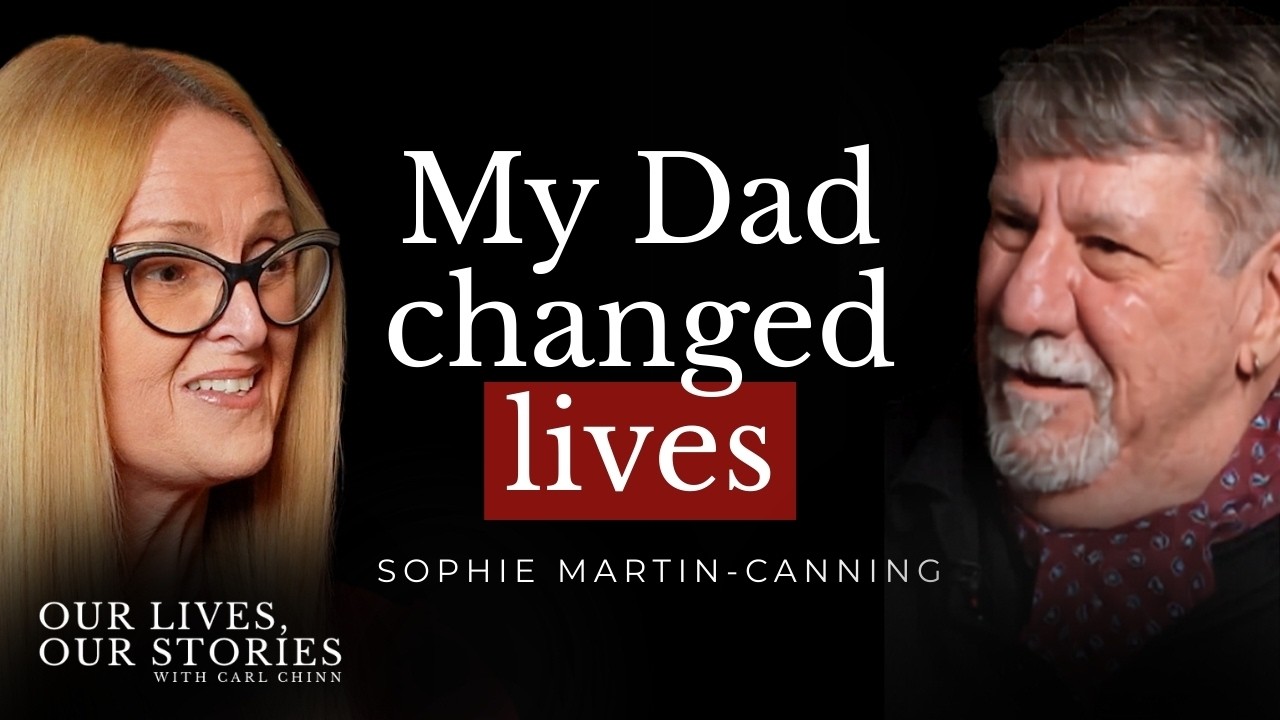
Sophie Martin-Canning is an author who grew up in a Birmingham Irish family and drew on that childhood for her novel Kissed By The Angels. The book is a coming of age story with a spiritual and philosophical edge, set partly in the world of boxing, a nod to her father Paddy Martin who was a boxing trainer to young fighters across Birmingham.
In this episode
Sophie's novel Kissed by the Angels grew from something her late dad told her about the facial birthmark she was born with, that the angels had come and kissed her, and she and Carl use the book as a way into a warm tribute to him. They talk about the confidence he gave her, his years coaching young boxers, and how the story's heroine meets angels who speak in riddles she has to unpick. Family history surfaces too, including an ancestor who went into the workhouse and kept escaping.Find out more: Waterstones Goodreads
Chapter markers are not available for this episode.
Transcript
This transcript is auto-generated and may contain errors. Tap a timestamp to jump the video.
It was all from him saying that, youknow, at the angels had come kiss me andthat I was special.>> She went into the workhouse.>> She escaped many times.>> My dad had boxed.>> Soon became head coach. Uh, you know,this was in the early '70s. He dideverything that he possibly could forhis lads.>> Welcome to our lives as stories. Andtoday, I'm chuffed to be able to talkwith Sophie Martin Canning, traveler andexpert traveler. That's for anotheroccasion and author. Sophie, thanks forjoining me today.
>> Aw, thank you for having me, Carl. I'mhonored.>> I want to focus on two themes today,both interconnected.Your book and your dad, your late dad,cuz we're going to be paying a tributeto him today. But tell me first of allabout the book that's connected with himcalled Kissed by the Angels. Now, Inearly said Kissed by Angels. What's thedifference?>> Well, Kissed by the Angels is somethingwhich came from my dad. My I was bornwith a a facial birthmark, and my dadhad always told me when I was a littlegirl that I was kissed by the angels.So, he never told me I was kissed byangels. He said I was kissed by theangels. And I think that may be aBirmingham thing as well, you know, it's
you know, I don't know. Maybe it's likea local colloquialism. I'm not sure, butyeah, so, um, Kissed by the Angels.Yeah.>> Talk to me aboutthe facial birthmark, how you felt as achild, how your dad made you feelbetter.>> As the character within the book, it itstarts off my book starts off thatthe protagonist, Aura, she doesn't feelthat she has anything wrong with her.She doesn't feel that she's anydifferent to anybody else until shestarts school. On her first day ofschool, she's desperately tormented, andthen that evening she's told that she'sgot the birthmark by her her dad. Um shehe's
He tells her that she has the birthmarkdue to her being kissed by the angels.And that was exactly like myself. Inever felt that I was any different toanybody else, thatit in a way I was I was different in thesense that I was more special. So, youknow, if any I never felt that mybirthmark wasit something that I should be ashamedof, and that was definitely I say mydad, my mom too, but you know, my dadwas just all, you know,it was all from him saying that, youknow, at the angels had come kiss me andthat I was special. That was his way ofsaying that I was exceptionally special,but he just instilled this confidence
thatumyou know, why why should you be ashamedof it? You know, it it was um you know,the birthmark is something that youshould be proud of.>> Before we move on to your mom and dad indetail, how does the book develop fromallat the start as a child going to schoolbeing tormented? How does the book moveon?>> Within the first chapter when she doesit it moves pretty fast into it. So, umit doesn't draw on on that too for toolong, and and she's So, she's tormentedon her her first day. And then thatevening herfather tells her that she's been kissedby the angels. And then from that timeon the angels begin to appear in her
presence. And it's not all airy-fairykind of angelic umapparitions.It as she grows up through the book inBirmingham, um all based aroundBirmingham, the um angel just throughthe trials and tribulations of a regularlife of a regular girl. You know, goingthrough you know, a coming-of-age kindofexperience.Whenever something happens where, youknow, she needs guidance or assistance,the guidance and assistance is obviouslythere from the family unit, but then ifshe there's an issue, the angels willappear,
give her this philosophical informationwhich she has absolutely no idea whatthey're talking about. She has tounravel their riddles in order to findher destiny, essentially. And then shejust grows up throughout the book basedaround this umBrummie and you know, I Irish Brummiefamily. And um you know, just the humorand the um you know, everything that youknow, cuz I think as well a lot inliterature and and more so now,obviously, with the Peaky Blinders,people are focusing more so onBirmingham, but there's not so muchliterature based in Birmingham, which it
when you consider it's the second city.And you know, there should be, you know,there should be more out there, I think.Not not just for Brummies, but you know,in general, you know, with how much youknow, no need to tell you with how muchhistory's here and you know, the thatshould be known.>> How much of you is in the book?>> A lot. And I I think with most authors,there always always is. You know, thatmost authors will incorporate themselveswithin maybe not within the protagonist,but within some character within thebook. So, yeah, there is a lot of me.There is It doesn't mean that everythingwhich happens to Olalla happened tomyself. Something which may have
happened to one of the other charactersmight well have happened to me, whichI've threaded through. Um I might threadit through one of myself as wellthrough, you know, the older charactersor the younger characters, buta lot of the stories which is is quitefunny, you know, when I I was on the umpromotion route with it.A lot of the stories which people wouldthink was purely fictionalare the ones which are purely factual,you know, because they're so they're soinsanelybizarre that you would think, "No, thatreally couldn't have happened. Thatcan't be true to life." But yeah, it'sso work out which ones are and whichones are.>> And that that brings us quick into saythat a lot of those stories are tied in
with your extensive travels across theworld with your husband, Martin.>> Yes, absolutely. We we did over 100countries um within uhwe left at the beginning of the '90sand um traveled all around well,everywhere. We started in the Americasand then um from America, Canada, we'retraveling and living at the same time.Um then fromthat's every state actually exceptAlaska we did at that time. Um and theninto Canada as well, which we'll get towhere cuz my dad um had lived in Canadawith his brother, so my uncle, whoobviously was from Milk Street, um he's
still in Canada and my dad's extendedfamily and group of friends which he'dmet in the '50s and '60s. So Martin andI spent a lot of time with them inCanada,which was phenomenal. And then fromthere onto Hawaii, we lived in Hawaiifor an extended period. I studied thereat the university.>> Marty worked.>> Yeah, Martin worked there. I workedthere also as well. We both worked atthere. We got engaged in Hawaii umrandomly.Um and then um South Pacific or also inSouth Pacific Islands and then to NewZealand um Australia And this was likein the very early '90s where it wasn't athing for working class kids to do. It
It was No, it's like you say, "Oh,you're going traveling. You're going toAustralia." It's kind of just what'sdone. It's a gap year. Everybody doesit. But at that time, it was only theelitewho were doing it, you know, like theliterally the elite. It wasWe were kind of the start of thatgeneration who who were doing it, youknow, just going and and not going forany specific purpose other than tobroaden your horizons and travel.Other than getting back with my dad aswell, going back, which we'll get to,you know, him going in the '50s justspecifically to travel, you know, it wasunheard of, really.>> How strong was the call of Birminghamand Hull?
>> Oh, well, so after we So after Australiaand then Asia, um we did every countryin Asia, and then back into Australia,work to do work, and then make some moremoney so we could continue with thetravels, then with Safari, Cape Town toCairo.Um we came back to Birmingham. Um Thatwas the first time within many yearsthat we'd come back.And umcuz obviously we're we're both veryclose to our families.And we'd picked up a a car a van, andthen we drove around Europe for over ayear, every country in Europe, slept inthe back of the van, and then back toBirmingham just again for a few monthsworking, and then to South America,
South America then to New York.Anduh back to America, I should say, andthen we settled in New York for a longtime, butwe we always knew that we wanted to comehome. We neverwe never thought that we wanted to everbe away from Birmingham permanently. Wewere We were kind of just, you know,experiencing life overseas, but we neverthought I wouldYou know, a lot of people that you speakto when they go away, "Oh, yeah, I'mdefinitely living here. That was it.That They're moving there." But we neverhad that. We always thought we werecoming back. You know, we always wantedto come back. We always did love ithere. Although we did love our travelsand loved our lives wherever we were,
butit was just we were experiencing allthese amazing things, which is anotherIt's another day on the podcast. But umwhen we came back we because we'd comeback to get married andwe just loved our life here. We lovedour friends. We loved the city. And Ithink until youa lot of people and we which kind ofannoys me a lot umis the sense in that in America you findthatpeople have a real love for wherethey're from and a real pride in wherethey're from.And you do get that here when you speakto people and you think you really do
love the place that you're from, but Idon't think enough. I think that youknow, you knowthat will be the first question a lotfor us when we've lived all over andpeople will say, "Why Why are you here?"So, wellwhy am I here? Because it's the bestplace that we could be. You know, my ourchildren know, you know,we've got green cards. We could be inAmerica, but they choose to be here. Andone of the things which they cite um allof the time and and they do say aboutBirmingham is that they feel moreculturally enriched in Birmingham thanthey do in New York City. Because theysay in New York it's based around um youknow, tourism, you know, the theater
everything. I know in New York it'ssupposed to be the hub, but it I don'treally think that it is, you know, Ifeel, you know, wehere in the city, we've got we've gotabsolutely everything, you know, theballet, the opera, the theaterproductions here are phenomenal, yourconcert halls, you know, you andeverything's so easily accessible andand that's what I say, you know, whenpeople say, "Oh, well, why why do youwhy are you here?" Like when you couldbe wherever you want to be andI'm here because it the I feel, youknow, I have livedall around the world and I do feel thatwe are we are so incredibly lucky herewith what we've got.
Our position in here in the countrycentralized, soif we do need to do anything, we can getanywhere in such a fast time, you know,if we need to be in London, yeah, if youneed why would you need to go to Londonanyway when you're in Birmingham, butum, you know,you can be there in just over an hour onthe train fromand you can be in Liverpool, Manchester,Scotland, anywhere, you know, we're socentral and it's so geographicallyplaced, it's perfect, but I just thinkthethe cultural mix as well,if other cities had the cultural mixthat we have,it would be the trendiest place in theworld, but I think that Birmingham gets
that oh, you it's Birmingham, butI say, if if it was London and they hadthe cultural mix of what we have and youknow, you hear you hear chefs all thetime, you know, we went to see see JamesMartin at Birmingham Symphony Hallat doing one of his shows at a cookingshow and he speaks all the way throughand he's he said within that show thathe he always came to Birmingham becauseit was the only place where he couldsource certain spices and that's beenfor the last 30 years.You can get them like now specialistplaces will have these things, butyears ago it could only been Birminghambecause of the the cultural mix that we
do have, but yeah, I could go on abouthow proud I am Birmingham.>> Obviously Birmingham means a lot to youas it does to me, butit's also mom and dad.>> Yeah, absolutely.>> So take you back to your childhood.Name me mom and dad. Tell me a littlebit your mom first, then we'll move onto your dad.>> Yeah, so my mom she was an O'MalleyCarmelo O'Malley. She wasshe was actually born in Persia Road.My grandfather is from Mayo.And they had boarding houses. So when hehad first come over from Ireland helived withwhat became my great grandmotherNina, who was another character. That'sanother podcast all together. She was a
phenomenal lady and had boarding housesall over England in London.I'll I'll remember exactly that thatRillington Place. Do you know the murderplace?>> Yes.>> Yes. And they buried all of the victimswithin the walls. She owned the housenext door and that was her boardinghouse. And she she owned that on herroad. She was born in 1900.Andshe was phenomenal like phenomenal ladyway before her time. So yes, so that wasthey had the house on Persia Road andwas withmy nan nan in you know, andand then they moved to Nechells.So my mom was in Nechells andbig Irish family. There was uh
there were 10 children originally. Acouple of them died in childhoodinfancy.Andbut yeah, there were eight of them.All only a couple of died recently, butthe O'Malley's yeah, so they were bigIrish family.>> So your mom's an O'Malley. she's growingup in Nechells, very working class area.What about your dad?>> Paddy Martin, yeah, Patrick PatrickMartin, otherwise known as Paddy. Um, hewasborn just not far from where we areright now in Milk Street, Digbeth, anddo his house would be it's a factorynow, but it's at the entrance of mydad's house would be exactly whereopposite Moores Row. So, right at the
very back of St. Michael's School,you've got Moores Row, and if you lookedout of my dad's yard, cuz obviously hewas four back. He was so proud of hishouse, andI said just recently in the eulogy, youknow, most peopleuh, expressing degradation like in thewar time, andobviously it was, but if you listen tomy dad, you would think that he lived inBuckingham Palace, and it was the bestplace on the absolute planet to live,you know, he loved it. He loved everyinch of the city. And he loved Digbeth,he loved Milk Street.>> Let me just explain to people that mightnot know what a back-to-back was neverthat form of housing thrown up byjerry-builders, badly built, insanitary
in the Victorian age, not onlyBirmingham, but in St. Helens, inNottingham, in Leeds, in Sheffield, inmany parts of the country. And it wasliterally a terrace of houses with abrick wall dividing from another terraceat the back.As you went down the street between thefront houses there was after an entry,you'd go up the entry into what wasknown officially as a court, but whatBrummies called a yard, and that wouldgive you entrance to the houses at theback of the front houses, or also toanother terrace, and also to sharedfacilities, the brew house, the communalwash house, and the miskins, thedustbins, and the soft, the drain, andthe lavatories that were shared betweentwo or more families.
>> Exactly.>> What did your dad tell you about thoseearly days as a backstreet kid.>> Oh, so so many stories. He They actuallyobviously they were all terraces, butfor some reason at the end of their yardthey they lived in a detached. So as hesaid he was like they were like thecastle at the end of the street whichcuz they were unheard of wasn't they asyou would know in the in theback-to-backs. So he they were asingular detached for some it must havebeen obviously architecturally wherethey placed it and just couldn't fitanother one in not because it was somelinked detached in the in the corner,butyeah, so you know that like you say
about the brew house and thethe wash house and they umyeah,well during the warmy dad was born in in the 38. Soobviously a war baby and umhe he would just love his his wartimestories about you know the air raids andum theirair raid shelter was the institute.>> Which is now aa center forbands and gigs.>> Exactly and then on when in the late 80swe thought it was hilarious in the youknow the the late 80s beginning of the90s itstart of the rave days.My dad actual air raid shelter
underneath was called the dance factory.It was an underground club. It wasgreat.But yeah, he boxed there as well. My dadwas a boxer. He went St. Michael's. Hishis dad wasoff the boat Irish his mom'sgrandparents, but they they'd come overto the Vale of Evesham originally fromfrom Ireland worked as migrant farmersin the Vale of Evesham and then moved toBirmingham where my nanNanny May whowas one of those characters which theydefinitely broke the mold.>> Give me an idea about her.>> Uh, she>> She's your dad's mom, isn't it?>> This is my dad's mom, yeah. But withinmy book, I will say that there's a
conglomeration in some charactersthere's a conglomeration of a fewpeople, you know, that make up oneperson.I will say the father figure within thebook is a absolute direct copy of mydad, umbecause he was just so wonderful. He hadto be, you know,you you it's like all romanticizing it.You couldn't but you really couldn'tmake him any better, you know, just as adad, as a person, you know, everythingthat he was.But also, um, the Nana Bridie um,character, the grandmother within mybookis exactly like my Nanny May. You know,shethere was no censorship. She worked soincredibly hard. And
I always say about, um,you know,you know, obviously, I hate racism to itany any level.ButI believe as well, like a lot of racism,it's not about color, it's just aboutclass. Andwhen I look at my nan's class and theway that she was treated and the waythat, you know, she she lived and theway that she was treated by the elitesof the timeit would be exactly like, you know,people are complaining about now forpeople of color because that it was theclass that she was in, you know, thatshe was a, um, a housemaid in Edgbaston.Um
another story there, she had she, um,a couple of children very, very young,um which nobody knew about. She was andit was theumthe owner, you know, the, um, the masterof the house, she would have had>> No No>> Yeah, absolutely. No choice. But shewent into the workhouse. Um you know,she she was in the way in Dudley Road.Umand umwhat's that saying that's written abovethe doors of the workhouse in>> Well, it might as well said enterall you that enter abandon hope.>> Yeah, exactly. Well, she escaped. Sheescaped many times um with the with thechildren. So, those children wereactually adopted. Umthey the two of them she she kept them
for as long as she could. Um and thenthe her one of sister wanted to adoptthe one of them She was very very young.She was like13, 14. And it wasn't anything by choiceas I said obviously not by choice. So,the one uh went to the Americas and thenthe one actually um many years laterwhen I was a young girl, they found her.Which was phenomenal. So, um they gottogether in the '80s.>> Charlotte May May's was it?>> May, yeah. Charlotte Charlotte May, butshe decided Charlotte was too posh. So,>> So, she must have then found other workwhen she got out the workhouse.>> Yes. Yeah, absolutely. She worked in themunitions factories all of them. Sheworked and right on um well, all of all
around the munitions factories righthere in Digbeth. Yeah. She actually sheit was very distinctive what she had.She her hand was curled up like this. Umwe thought it was phenomenal when wewere children it because her two fingerswouldn't move. Here, they were they werestuck. Um she'd she'd got her handcaught in one of the machines. It wascoming down uh it's you know, it was aone of the press machines and it stuck.So, she'd put her hand in to release itand it went down on her hand. And she umshe lost They thought she would never beable to It was a right hand as well andthey thought that she would never beable to use it again, but she got usage.She could move these two. And she coulddo everything, so it's like a claw, and
she was this phenomenal um cr- she couldcrochet anything, because that was oneof the um techniques that they used likefor physiotherapy to get her to move herhands. She could knit and crochet, whichwas amazing, because she wasn't like aknitting and crocheting grandmother, youknow, she wasn't this uh you know,little old lady who'd sit and teach howto knit, but bizarrely, she was the onewho taught me how to knit and crochet,because she was phenomenal. She had nopatience, but she was um phenomenal atit.>> So, sh- eventually she met yourgranddad?>> So, yeah, she met my my dad's dad,granddad John, who was actually um bornin 1889, whichfor my age, um you know, I've
I'm 53, um yeah, 53. I was um and for meto have a grandfather who was born in1889 is is quite amazing, really. Andum so, he was quite considerably olderthan my nanny May.Umand yeah, so, he he'd never beenmarried, and umhe met um May, who wasa young girl. He obviously didn't knowabout the I thought the two children atthat time they've got they were adopted.Then she was um working in Digbeth, andum yeah, and they werethey met and married w- uhquite fast, and then she moved into thehouse, cuz he lived in the house in Milk
Street. It w- he lived there with hissister, Mary Martin, who was actually areally big character within uh Digbeth.Her husband uh was umw- uh Frank Whistle, who was a PeakyBlinder.>> Yes.>> So, he was they um they were quite theyowned the betting shops within umwi- within Birmingham, and she wasa really formidable lady Mary Martin andshe just thoughtmy nanny May because she was a younggirl and she was actually very very verybeautiful. And she just thought that shewas after my granddad for his house in
Digbeth Street you know because he wasyou know he had a job and he he'dobviously had no children as as an olderyou know going into her as an older man.What would considered old then not nowbut obviously they were having childrenwasn't they at 19 20 whatever and he waslate 30s going into his 40s and umMary Martin had this sheused to chase my nanny May aroundDigbeth but yeah they they became closeeventually but yeah so they were veryshe was very well known withinwithin Digbeth Mary Martin and mygranddad John. They were Sly girloriginally yes yeah and thenmy nanny May and John were married and
then Kathleen was born first my auntieKathleen who's still alive she's um95nearly 96 she's amazinganotherumphenomenallady she's actually she actually movedup her husband she actually moved up toStoke on Trent but umyou know she wonahuge amount of awards for you know afemale business she actually umwas she was a counselor withinum Stoke in I think it was the 70s likelate 70sbut yeah she's a character and then myuncle Peter
Peter Martin who was the most amazinglovely mana character but very different to my dadmy dad waswhen he was there you knew he was there.He was you know loud character andwhereas Peter wasyou know quite reserved and quiet butyou know with us as you know a family hewasphenomenally hilarious but he moved toCanadaum permanently with my dad. They they'dmoved over in the the 50s.Peter had gone first and then he cameback whenmy granddad died. Um and then my dad was18 and then they both went back to
Canada.>> So just before we get there to Canadalet's go back to your dad's childhood.>> Yes.>> He's growing up in the back streets.Birmingham's got what we used to callbomb packed everywhere. Bomb sites wherethat the blitz had hammered Birmingham.Your dadhad a joyous childhood though didn't he?>> He loved it. He loved like the factoriesthe rooftops the canals the River Realoved smashed his teeth out on the RiverRea literally you knowwhereso from Moor Street when you walkthrough Moor Street there's an there's agate entrance now it's it's blocked upnow it's bricked up you can't go throughit but that was my dad's entrance to theRiver Rea so he'd run down there and
he would tell us with joy that they'dswim with the river rats you know youknow he said they were huge they werelike you know mini dogs and they'd bethey'd race them down the River Rea youknow cuz I think in my dad always said alot of people always thought the RiverRea was a canal. They they never thinkof it as being you know a river andlowest obviously lowest point inBirmingham.>> And many people don't realize evenBrummies that we have a river runningthrough the middle of it.>> Yeah right through the middle of it.>> And where we are today in Meriden Streetis just a couple of streets away fromwhere your dad grew up in Milk Streetand we're just below the Bull Ring. Yeahso your dad was very much a townie kid,wasn't he?>> Oh, yes, absolutely. Well, in the war aswell, where most children were evacuatedin the war to Wales or, you know,
wherever in the countryside.Um, my nanny May didn't want them. Idon't know whether that came from losingthe other two children, you know, shewhich she had really no choice then.They wasn't leaving, so there was um,Kathleen, Peter, and my dad, and thenMargaret came um, aduring the the war in the early '40s.Um, she tragically just died as well inum, August of this year. But, um, andthen my auntie Maureen cameafter the war um, years later.>> Your dad growing up it during the war.Tell us some of the stories.>> My um, my nanny May didn't want them tobe evacuatedwithin the war, so
to be childrenwithin this area, the most bombed partwhere all the munitions are being madewithin Deepdale as well, which wasobviously the target of most of thebombings. They were in the middle of it,andhe would tell us, you know, so so manystories about the air raids, anda bomb literally went through theirroof, right through their my Peter andmy dad's bedroom, straight through theirbedroom floor into the kitchen scullery,and landed on the floor. Um,thehole in the roof was the house wascondemned, but they still lived in itall the way through the war.And you know, there was a condemned
notice on the front, but nobody movedthem, or you know, there was nothingnothing happened with that. Um, and thenluckily theywhen that bomb did go through, they werealready in the institute.>> Presumably it didn't go off?>> No, it didn't go off. No, no. Theydeactivated it, came and deactivated it,and then obviously took it away and saidthere was a a my um my granddad John hadhad to fill in thethe pit within the floor. Nobody cameand did anything. I know you just wouldyou know you'd be moaning that somebodyhadn't come and sorted it out, but yeah,nothing got done. The roof you know wasjust patched over and the whole rightabove Peter and my dad's bedroom, butalso um
hethe one evening when there was an airraid and you know the anti-aircraft gunsthe which my dad called the ack-ack gunsumthey were being fired up and then thethey rained down the shrapnel from themcame down and the air the the siren hadgone off and my dad was running to withhis mom May and my granddad cuzobviously he he was in the First WorldWar so he was in Gallipoli andeverywhere he you know that's anotherphenomenal story you know his FirstWorld War stories the umyou know his stories of him hiding incarcasses and you know fromjust amazing. Um but obviously in the
Second World War he was too old. Youknow he so he was a warden. An air raidwarden. Yeah, so um he um he was out onpatrol when the air raid had gone off atthe air raid siren had gone off so mydad his mom and umsorry his dad was the warden and then uhhis mom and the children all ran to theuh the institute to the air raid shelterand one of the pieces of shrapnel hit mydad right in the front of his head.Um the he still had he he still had hestill showed us the scar you know and itwas quite significant through the frontof his head and he said and the bloodwas pouring he said he remembers itvividly and the blood was pouring
through his eyes he he was blinded andas he run to the corner of Digbethfrom Milk Street where the bull is onthe cornerrun straight into the belt the lightwhich obviously they had those metalcovers on so the the planes abovecouldn't see the light on the on thebelt and it was a sharp piece of metaland it was only as as big as>> You know what I mean about four?>> Yes, four yeah and umrun straight into the metal cover onthat and cut his head again so adding tohis war wounds so more war wounds butyeah but it he he just loved it you knowhe would him and Peter would tell us
stories about you know how they'd goaround and play say playing in the bombpacks and playinghe said they found um you know wherethey cuz obviously everything was madeinaround here and one of his uncleactually delivered all the um Spitfireparts to Castle Bromwich.>> Yes.>> So he'd be with his uncle Fred as wellFred Cox.Um delivering umSpitfire parts and um but they said thatthe screens of the Spitfires were storedunderneath the arches in the the back ofDigbeth and um he said that they used totryit it was itit sounds like he was uh in a trouble
but he said him and Peter they they wereyou know they'd go and see how theycould work out how to break into theyards and but another thing you'retalking about the railway track umhe said he he used to tell us how whenthe coal um trains came through and thecoal would fall off>> Yeah.>> the wagons of the coal train they'd goup and collect the coal and then one ofthem would stand at the bottom becausethey would have the men coming behindshoveling it on you know but they'd getup there first they were only obviouslylittle and he would because he was oneof the the smaller one of the group,he'd be up there and throwing the coaloff cuz he could run faster away fromthe men who were shoveling it. And Peter
and somebody out Kathleen as well thatthe sister they'd be at the bottom withthe sheet. So when they threw the coaldown it didn't shatter on the floor youknow it just amazing stories.>> going up the viaduct.>> Yes.>> To where the coal wagons are coming in.>> Yes.>> And as coal is dropping off he'schucking Could he now choose>> His brother and sister are holding out asheet a blanket whatever it might be tocatch it. And then they'd go round andeither use the coal for themselves or orsell it. Um and he used to do um he usedto do odd jobs fora greengrocer who was in um the the oldmarket at the Smithfield market whichobviously was closer to them and then it
moved didn't the the original Smithfieldmarket. He He said that he worked for agreengrocer and he'd used they they usedthey'd used their um cart which was forthe fruit and veg for the coal. Said hegot battered a few a few times for usingtheir fruit and veg cart for the coaland he also worked for Neal's Cycles.That was his first proper job.Um which was on Digbeth. Um it wasI don't know if you're aware of Neal'sit was a a really significantand well-known shop. It was like um Valeand Sons. He'd work for them as a youngboy you know from a very young boy yesseven eight running errands for them.And then when he was about 10 heactually they actually gave him a job
and they actually offered him anapprenticeship to to work. They adoredhim and he loved it there but heobviously hehe went on to have hisapprentice apprenticeship with Whittles.He went he was a bricklayer.But um but also reading get to his butwent to St. Michael's, loved it, and Mr.McCoy, the headmaster, he ummy dad still cited things right up tojust that a few months ago when he died,you know, things that Mr. McCoy taughthim.Even, you know, you know, in the thefifth the '40s and and the '50s, youknow, he was one of those old headmastercharacters who
uh what he would looked after thewelfare of the kids, you know, he wasbothered about these, you know, thesekids.>> He was a a deeply influential teacher.He came to St. Michael's Catholic Schoolas a young man,and he worked his way up to become head.He was well involved in boxing. Is thatIs that where your dad started to learnget involved in boxing?>> Absolutely. And he was a very goodfriend as well of my granddad John, Mr.McCoy. They were very close. They usedto drink together in the old bull. Umthey were he he'd go in and and find Mr.McCoy in there with with my granddad.Um but yeah, Mr. McCoy saw my dad's umcharacter, his strength, determination,and
and I I thinkI think a a lot of children boxed anywayat the time. It was, you know, but hewas my dad was very good, uhexceptionally good. Um he also So, heboxed for St. Michael's.Um and he also boxed for the custardfactory because at the custard factory,there was the added incentive that theygave you custard. Yeah, so they gave umwhen you went training, you'd get a bowlof custard. And you'd also get jelly aswell. They'd give you jelly and custard.So, it was an it's obviously they wereso poor and like food. Although, if youheard my dad, you'd think that, youknow, he had they had a banquet everynight. Um you know, the the things thathe did have.
But I I think, you know, my nanny May,she was the character that she was.That's digressing, but you know, she wasable to get She worked anddid, you know, she would do a favor forthis one to to do a favor for that one.She was a wheeler dealer. She was one ofthe old old school wheeler dealers andthey did seem to have a lot more than alot of others, you know, because of, youknow,how she did work everything. And I don'tknow if everything was paid for, let'sput it that way, butBut, um but yeah, so with umwith say with the custard factory, Ishould say she and then he bought they'dhave their boxing nights in the DigbethInstitute. And again, um they could
either choose to have a a little like itIt's not like a medal that the childrenget now, but it was like a a kind oflike coin but medal or you could getcustard. So, they all chose to havecustard, you know, so um so that thatwas um>> So, he's got his job at Neales.>> Mhm.>> Not full-time up but a lot of part-time>> Yes, yeah.>> He leaves school at 14 years of age.>> Yeah.>> And what does he do then?>> So, he got an apprenticeship withWhittles um builders. So,>> Very good builders.>> Yeah, absolutely. Yeah, Birmingham-basedand umso, he did his apprentice a fullapprenticeship with them, sitting andgolds and umyeah, and he loved the building. He
loved the camaraderie and the just thecrack and, you know, the the work aswell. Like he he literally loved everyday of work, you know,everything that he did.>> I was just wondering, to get anapprenticeship as awas a difficult thing in those days. Iwonder if Mr. McCourt had an influence.>> I would say so and it he was um I sayabout his boxing prowess, he was aphenomenal boxer and he had a an anamazing record with boxing. And I thinkto get to that level, you have to havethe determination and and the dedicationto be able to stick to, you know,what he was doing. So, um I think that
went a long way for him, you know, cuzhe was you knowit wasn't he was very very very smart umvery academic as you know as he gotolder, you know, heit wasn't academic in the sense that hewas grammar school and you know theexams and you know things like that butas he as he got older, you know, hishistory knowledge and his math, English,everything he was very well read, verywell traveled but umyeah, so I think Mr. McCoy definitelybecause he did get offered as I say hegot offered the apprenticeship which asas you state that he it was difficult toget an apprenticeship and he was offeredtwo. So, he had the choice of being an
apprentice, you know, in thewith Neil's. Um they offered him a job.I don't know how the apprenticeshipwould have worked with the bike.>> So, he was a is a teenager now is atwork. Is still living at home in MilkStreet or have they moved?>> Yeah, no they they well they lived inMilk Street right up untilthey had to move and it was all beingdemolished post-war and then they movedto Erdington. They moved to umuh just off Tyburn Road St. Dominic St.Dominic's Road Oak Shard Road umaround that area there.Um Downside Road it was actually theythey got a house my granddad had got ahouse there um and granddad and NannyMay should say. And um
yeah, so heI don't know what year that was actuallybut it wasat the latest time that they could moveout. Everybody had gone.>> He's doing well as a brickie, isn't he?>> Yes, yeah, absolutely. He worked on cuzobviously post-war Birmingham all neededto be built up again and like there washuge huge building projects going on allover the city and he built the he workedon the big topin the in the city. So>> big top site was where the big bomb haddropped, destroyed part of New Streetand High Street and they there was a bigtop there for a while.>> Yes.>> A circus.>> Absolutely.>> And then when they rebuilt it, your dadwas involved in that.>> Yes, he was involved in that it rightthrough at that time that would have
obviously been when he was an apprenticeand a new a new bricklayer and and thenall of the the new umeventually obviously went away and thenhe went to America and Canada and cameback and he you know he built ChanceryCourt and like the old>> So let's talk about how he went toCanada. What happened?>> So umhis dad's his dad died um he he had ananother they had another sister as well,Maureen. She was born uh 10 years aftermy dad, so she was born like late '40sso post-war.Um as she was a little girl and so he'dkind of taken on the role my granddad
wasum you know older so he wasn't workingand my Uncle Peter had gone to Canadafirst um and then ummy granddad died so he'd come back umthey buried my granddad but Peter was umnational service he he'd gone away fornational service as well.Uh he's a few years older than my dad.Uh and then umthey decided thatthey'd go to Canada sothey lived in Toronto they had the mostphenomenal time you know just they justhadthey were just living the dream reallyyou know coming two kids coming fromDigbeth and then umgoing and and living in the new world
and like the things thatthey could never imagine possible. Somany stories You know, they he he boxed.He He turned professional in Canadawith with a very significant boxingtrainerand and manager.Had many fights all overCanada, North America.And you know, doing very well, but healso worked on the building as well. Healso was bricklaying.Andactually built many significantbuildings and umall all throughToronto, northern Ontario, which isstill there. We I was just there again.
Martin and I just said when we weretraveling, we lived there for extendedperiods. And even now, just this summerwe went back again with our children.And some of his buildings and his nameis is still etched into, you know, thecement and in Toronto.Um but yeah, theyum he met an amazing family who becamelike family. They're like my extendedfamily inToronto.Umthey're all still awareof his his legend and um you know, someof theamazing things that they did. So,one of those was Jimmy Timber who wasthe same age as my dad. And Jimmy,
Peter, and my dadand my dad bought a Cadillac CoupeDeVille and umthey traveled across America and theydid Route 66 at that time. Umright from Toronto, not from Chicago,all the way through America.Amazing stories.>> And uh are they stopping off to do somework and then carrying on?>> yeah, they were traveling. They It waskind of like Jack Kerouac on the roadkind of thing. Yeah, I think they cuzthey'd worked so much within Canada,they got a a body of money. Right. was alot of partying going on, I think, anduh yeah, they'd stopped off a few placesalong the way. Um I know they were inChattanoogain uh for a while. Um they went rightdown to New Orleans. They
they zigzagged all the way through thethe country, through Texas, and theneventually into uh to LA. And then inLA, he um joined another boxing gym.Boxed again. Um but later they settledlike foruh extended period. And he umhe worked on Disney what was theoriginal Disney World. It had just Ithad just within a year or two. Um Idon't even think it might not even havebeen that long around.Um maybe just under a year. It was justuh and it wasn't completely finished.They Walt Disney wanted it opened. Hewanted this big opening because he wasworried about, you know, competitors
coming in, Knott's Berry Farm, and andeverything being done. So, my dad builtum worked on the original rides and umyou know, when you're queuing up for therides, you've got all of the umattraction going through, and he did allthe brickwork for all of those, did allthe brickwork for all of the rollercoasters, which um was still there rightup until we were there in the eightDad took us back as children in actually'78, the first time. And um so oh, Ibuilt that in the andthe late '50s. So, he he had a lot morefights then, had a great time, and then>> Just before that, but what was whatweight was he fighting at that time?>> welterweight. So, yeah, just 10 stone,
so just over.>> And he kind of been good. In them days,to go up professional, an amateur sports150 fights, sometimes 200 or more. Butto be able to become a pro>> Yeah.>> he's got to have not only an ability tobox, but also to punch.>> Yeah. Yeah, absolutely. Yeah, he Andthat's what he was. He was a puncher. Hewas tough, like he was a puncher. He wasvery He had a clean record of knockouts,technical knockouts, or TKOs. Um yeah,so he's his record was phenomenal.>> So Sowhat makes him decide to leave all thesehis partying, boxing, bricklaying,sightseeing, and come back toBirmingham?
>> Well, to leave LA It's a funny story.When he left LA initially, it wasbecause at the time the Vietnam War wason. And they'd been joined actually byanother Brummie, my dad's close friendfromBirmingham, Johnny Donnelly, had joinedhim in America.And umCalifornia was the only state at thetime that had implemented thisruling thatbecause there was it wasn't conscriptedat the time at this particular time foreverybody for Vietnam.ButCalifornia decided that they wouldconscript new green card holders. Thatwas who would go first.
To Vietnam.And my dad and Peter and Jimmy werelike, "We're definitely not going toVietnam." You know, it's even thenknowing it was just like a nonsensicalwar going on in the Far East. And umbut Johnny Donnellyhe just loved the idea of, you know,going togoing to war in Vietnam. So he signedup. My dad, Peter, and Jimmy got back inthe Cadillac and did another routeacross America back to Toronto, but didall different states that they hadn'tinitially done.Johnny Donnelly went toHe was Dublin-born, but
Birmingham-raised.Um and he went off to Vietnam andtragically died in in action in Vietnamshortly after. So, um they madeobviously the right decision of notgoing.So, my dad went back to Toronto. UmBizarrely, umso, I from Milk Street, he bought a minigold mine in northern Ontario, justnorth of Ottawa. Like, who buys a goldmine? Umthe speaking to somebody in a pub,probably. Oh, this is a greatopportunity. The things that he boughthe's bought in pubs over the years quitehilarious.Um but yeah, no, he bought a mini goldmine and he he um he was a My dad was a
grafter, always just a worker. He justand he loved his work, which was the thebest thing about it. He He loved everyday of working, you know, and it's it'snot easy work, is it, you know,bricklaying. And in Canada as well, he'dtell us about, you know, the30-ft snow drifts that would come in.You know, if it's snow here or it itwould be cold, he'd say, "You've seennothing unless you've seen the snow inCanada."Um so, he umhebut he was obviously working. He'd mademoney, but he bought this gold mine, sohe he mined it in They mined it for alittle while and umand thenit was mined out
where when he'd initially bought it. Andthen to mine the next to do the nextpart to go, you know, break the land andgo through andit's not like now even where,you know, you've got the machinery tothink there might be gold there orwhatever. They had no idea. So, it waseither paythousands upon thousands to do that andrisk it not having any gold and, youknow, he didn't have that kind of money.So, hesold it for a He said he sold it for avery good profit. Um I well and then sothat's when he came back, but going backto going back in the to myself andMartin going back in the summer, that
gold mine is still going nowand it's stillproducing a huge amount of gold. Like sowhat could have happened?>> have been millionaires over there.>> been. We could have been. Who knows?>> Now he sells the gold mine.>> So he sells the gold mine and thought umI'mgoing tocome back to Birmingham, see the lads,you know, catch up with everybody. Lovedit here. Loved all these friend grouphere. There was a another umthere washe he's close friends from Digbeth, fromSt. Michael's, Tony Falesa, um obviouslyItalians. Um Tony um is very closefriend. And then Paddy Somerville,again Drogheda-born, butBirmingham-raised. Um and
they and before he he left to go to umto go to Canada, he'd met his lifelongclosest friend. He didn't go to schoolwith Tommy. Tommy was actually born inBelfast, but his parents sent him backto Belfast in the war. So he went andwas Granny Rea's in Belfast in the war,but then as soon as he could, he cameback to Birmingham. So my dad had met umTommy Morgan in in the pub and umit's really quite ironic actuallybecause, you know, with the amount ofthis city, Tommy Morgan was out thatnight withum two men from Belfast who he knew fromBelfast and they'd all moved to
Birmingham subsequently. And ummy dad was going to the bull on inCoventry Road to meetSonny Ramseyand the Ramsey brothers, Sonny, uh Tonyand Hugo.And he didn't know Tommy at this time.And that's when he he walked in and mydad asked the lads, "Do you want adrink?" And Tommy said, "Oh, yeah, I'llhave one, but I can't buy you one back."And my dad said he was buying them forthe next, you know, 70 years. But theironic part of that story is the Ramseybrothersare the brothers of Martin's mom. You myhusband Martin. How bizarre is that tocome around later? And and that didn't
come around until the end of the '80swhen Sonny Ramsey was sick and I wasvisiting him in hospital at um the QE.And um my dad had said at that time,"Where are you going? Or who are youvisiting in hospital?" I said, "Oh,Martin's uncle Sonny." And he And thenI said, "Uncle Sonny, Sonny Ramsey." Andhe said, "I knew a Sonny Ramsey yearsago." And and he described him and thengot his photograph album out and sureenough it was Sonny and they got backtogether, you know, years later, whichwas quite a mad connection. But anyway,so um my dad had met Tommy um in the pubthen and then they became exceptionallyclose. So when my dad thenwent to um
went to Canada umcame backfor this holiday, he moved intoSchofield Street in Nechells with Mr.and Mrs. Morgan, Tommy, and his>> I know where this is going. I don't knowwhere I'm going yet.>> Yeah, so umthen so Tommy Tommy is a character and ahalf. Like my dad and him together werejust like a comedy duo. They reallywere.And umTommy like Tommy would always say, I'mnot saying anything Tommy wouldn't say.He'd say, "Oh, my dad was always bankrolling him, you know, he'd you know,buy him all his drinks." Tommy wasn'tworking at the time. So my dad would bebuying this, buying that, whatever.And obviously my dad had just sold agold mine in Canada. So he He you know,
he he he money. He'd come back, he'dmade good money in America and Canada.He was in Birmingham for the first timein years, and then Tommy was just havingthe best time with my dad there.Found his return ticket to go back tohis brother in Torontoand 6 weeks later. So, it was just a6-week 6-or-7-week holiday that he washavingand then go back to Canada and take uphis life again in Canada, which he washaving a great time. Tommy knew the waythat he had his ticket to return. So, mydad was out um the one particular day,Tommy went into his bag, got his ticketout,took it to Cook's Travel in umBirmingham city center,
told them, which was evidently easy inthe '60s, um told them that it was hewas Paddy Martin and that he didn't wantto go back to Canada and he wanted tocash in his ticket. So, he cashed in histicket,got the money for the umthe for the ticket for the returnflight, decided to take my dad out on abender for the whole weekend, and my dadthought it was phenomenal and they hadSo, it was like an epic weekend drinkingevery pub in Aston and Birmingham andeverywhere. So, they were they were inin town and they were looking in thewindow of a tailor. They're obviouslyboth very, very drunk. Uh Tommy said tomy dad, "Oh, Paddy, I'll buy you a suit.Which one do you want? I'll buy you asuit. I've missed you so much. I'll getyou a Whatever suit you want." My dad
said,"Where are you getting all your moneyfrom, Tom? How have you come into allthis money?" He said, "Well, that's thestory, Pad. I cashed in your ticket andgot the money from that." Tommy said mydad knocked him spark out and then puthim on his back and carried him back toSchofield Street, and my dad neverhe went back to Canada many times, butnever to live there permanently again.>> And is it because he's living with Tommyin Schofield Street that he meets yourmom?>> Yes. Well, Tommy's younger sister,Christine, was the best friend of my momand and my mom was always in theMorgan's house and that's when he met mymom and they were married. Sohim my mom were married actually in the
Abbey in Erdington which where his hisfuneral was just a few weeks ago.>> I would have to say it's been a greatlife.>> Oh, absolutely. Absolutely. You know, hewas a great family man. They've beenmarried now nearly 60 years.Unfortunately, they didn't make it to 60years with him passing away together 60years, but they wereyou know, inseparable. My dad had hisyou know, the boxing and then you know,do everything, you know, but yeah, no,it was absolutely.>> There's so much more we could talkabout, but I want to move on towards theend looking atyour dad's funeralthere wasnot scores, but scores upon scores oflads and men
who've been in boxes. But tell me aboutwhy they were all there, so>> Yeah, there were hundreds of them whowere who were at the funeral, but theywereSo in the 70s, obviously my dad hadboxed himself as we spoken about, butin the70s he took himself down to the Holt inAston who and they had a boxing clubthere, Aston Villa Boxing Club and hejust went down to help out.You know, he was just interested inbeing around the the boxing gym stillobviously still had that love and thatwant and the need, you know, himself tobox. So he washelping train the lads there.Soon became head coach.
You know, this was in the early 70s andthenummy brothers boxed Dean and Bomber Martinboxed for Aston Villaand he just hadhundreds and hundreds of boys comethrough that door and he did everythingthat he possibly could for his lads. Hedidn't doanything in boxing. He didn't make onepenny from boxing. Everything, you know,theABA, the amateur boxing associationwould give,you know, expenses. It not that it wasmuch, but he wouldn't take expenses.Everything was filtered back into theclub. He wouldn't allow like the AstonVilla boxing club actually was
out of all of the boxing clubs, it wasquite lucrative. They they had a lot ofmoney. They had uma lot ofwho were working class men who'd donegood, you know,um Brum working class Brummies who'dmade a lot of money themselves, youknow, they'd gone into likemillionaires. They were like thechairman. They put a lot of money intoit and they used to have thoselike the Florida room. They used to havebig dinner showscouple of times a month. So, they made alot of money for the club. My dad wouldnever ever let because obviously theywere making money from the meals andeverything that were being sold tohundreds of men who would go to watchit. But then a lot of the clubs who did
do that, they would still charge andasked, you know, initially Aston Villawanted to. They wanted to charge theparents of those boys to go into thereand my dad would never allow, you know,this those kids are putting on,you know, your entertainment. How couldyou possibly charge their parents? Thekids would never be charged.They would make sure a lot of the kids,you know,single parent, even if they had twoparents, you know, they were fromdeprivedhomes, deprived neighborhoods andevery weekend we would have a differentboxer, different lad at our house fordinner. Some, you know, some of themwere, you know, six boys in the family,
you know, we'd have two one week, twothe next week. You know, some of thesekids had never had a a hot dinner, youknow, that my dad would be buying themchips after training on a Tuesday and aThursday. And umhe looked after all of them and theywere welcomed into our homeregardless oftheirraceprivilege, whatever it was, you know.>> Or their religion, ethnicity.>> Religion, nothing. Yeah, they wereAsian, you know, Pakistani kids, Indiankids, black kids, you know, Jamaicans.They were all welcomed in our home. Ilooked at all of them as my family. Theywere all I had I had my two properbrothers, but I hadhundreds of brothers, Martin being one
of them I obviously ended up marrying,soum but yeah,they were it it was like it oneliterally one big family andso many of those boys, you know,theymy dad helped them in any way that theycould as they got older, you know, he'dhe'd get them work on the building oryou know, employ them himself or getthem laboring jobs or get put them inthe right direction and everything.>> a word there.>> Yeah, what whatever he could do, he, youknow, he's my mom has writtenhundreds of letters to bank managers toget them mortgages, you know, thatwhatever he could do. Andso many of those boys whomost people would have considered would
amount to nothing, who were told by alot of teachers that they would amountto nothing, are now super successfulbusinessmen all across the world, allacross the country. Andand and none of them have forgotten it,you know, and his funeral was testamentto that, you know.>> From the Aston Villa boxing club, hethen moves to Erdington and forms hisown club.>> Yeah, before Erdington, before he wentto because it it But of the reasons thathe did leave, um,Aston Villa was becausehe had disagreed too many disagreementswith the, um,the officials because he would stand forhis boys. He would never let them betaken advantage of. So, when they'rebeing robbed in the ring after, you
know, blatantly winning three roundshands down. And there was anothertrainer within the city as well, DaveTolley. He ran Ladywood Boxing Club.Um, he was the same as my dad's, youknow, he was all for his boys.And, um,my dad had too many disagreements withthe amateur boxing association, sodecided to part ways with them and thenwent on his own, um,to from the official from Aston Villa.And he went to the Britannia originallyin>> On the Lichfield Road?>> Lichfield Road, yeah. And he had a gymabove the pub for a couple of years,this a space there. Again,that was all just cuz obviously AstonVilla was run, it was a big, um, club,but just purely my dad's funding it, you
know, renting the room and, um, youknow, having the lads there. Didn'tcharge any of them. Could never evercharge them.Um, so that was run. And then he gotthe, um,he bought at the side of the Rose andCrown, there was it what would have beenthe old dance hall to the pub. And theactual ring thatis inthe Rose and Crown still now to this dayis the original one from St. Michael's.My dad bought it from St. Michael's. Itwas the ring that he boxed in as alittle boy.>> stack connection with Mr. McCoy goingright right back. How long did your dadcarry on with the boxing? Was it rightup to the end?>> Right up until 2 weeks before he died.He was there every Monday and Wednesday.
Ye-Years ago, he would do Sunday morningsas well. Sunday mornings dropped a fewyears ago, but still every Monday andWednesday 7:00 without failevery single week.>> Is the club carrying on?>> Yes, yeah, absolutely. Martin and mybrother Deancoaching there.>> So now your chap and your brother arecarrying this on?>> Yes, yeah.>> What what aa legacy that your dad has left.>> Oh, absolutely. Absolutely. 37 years hewas atthe Rose and Crown.And again, just hundreds and hundreds oflads of thousands have come through thedoors andum you knowthey'll a lot of them have said as well
that their lives have been changed forthe better.>> see that at the funeral service. Therewas so manymen and youngsters who attended. One ofthe most moving parts of the funeral waswhenthe gravefor your dad when his coffin was laid init. Explain what happened then with itbeing filled.>> And so it was backfilled. Obviously, mymy brothers and Martin Cucullen, my son,obviously his his grandsonthey all filled in.Um my dad and then all of his boxers allcame and filledin. We hadthe bell again the bell which was rung
um was from St. Michael's>> The bell for at the end of the entranceat the start of the entrance.>> Yeah, that was the original bell fromSt. Michael's as well. Um which IMartin and my children who go to the gymevery week um and have done since theywere as long as they could walk.Umwe took that. So that was rung at theend and then all of his boys filled himin as well. Like all of his boxers, theyall took turns. Um>> There was great big mound of soil and acouple of three shovels and they took itin turns to each shovel some earth onyour dad.>> Yeah, it's like a movie.>> Yes,>> yeah, it was. It was amazing.>> I know it's it's still raw for youhaving lost your dad, but
to finish off,if he were to appear before you now,what would you say to him?>> Oh, it'sit's just thank you.I justI I said,you know,I never ever I never ever want to regretanything, and that was the thing that mydad always instilled in us. You can'thave regrets. You have to do anddo everything that you can possibly do.Live life to the absolute full, and hedid he did that.And and that's the only saving grace,you know, and comfort that you can getis becausemy dad was 100% happy
in everything that he did with his life,with how he lived with my mom, with us.He was, you know, he loved my mom. Heloved all of us, and he but he showed usthat. He And and that's why I wanted toget across as well in the eulogy. Youknow, a lot of people I know that, youknow, you hear stories that these menare wonderful at work or in the pub andthey're happy and jolly or wherever, andthen they go home and they're not verynice people. You know, my dad, and Iknow you're the same, like you're afamily man, and that your family atestament to how you are, and that'smy dad made the most wonderful home, andall he wanted us to to do was to be
happy. And you know, with my childrenand with my my brother's children,they my my children just adored him.AndIto say to him,well, I'd tell him off for leaving usinitially, you know, like howinconsiderate of him to even leave us.You know, we and you know,he was late 80s and you think it's goingto you know, I never dreamt it would beas hard as it as it was. You think oh,you they're invinci- I literally thoughthe was invincible and nothing would everhappen to him and he'd be there foreverand and I know when other people havepassed, their parents have passed,friends parents or grandparents and you
say, "Oh, but you know, they were theywere older. They had a great life, butit's still you still don't want them togo. You still want them to be there andwant their presence andum but yeah, he's he's got an amazinglegacy which is you know,as I say, a saving grace that he's gotthat and he was loved so much byeverybody, butthe only thing that does make me happyis that he was happy himself and he wasloved. And what was great about it is heknew he was loved which is I thinkimportant. You know, we we were with himnot just us,obviously,extended everybody loved him, but youknow, we were all with him right to the
to the moment. I was holding his handwhen when he passed, but um yeah, whichI think he isthe main aspect is that he didn't diethinking, you know, I I should have donethis, I should have done that.Nobody was here for me, you know, and hebut and and that's one of the thingswith my dadnot even digressing, going back, youknow, he had the he was in Hollywood. Hehad hehad the parts in some some movies andhe didn't like it. He didn't like beingtold what to do. He said it was boring,you know, you're standing around most ofthe day. And I said to him, "Do youregret not taking on the movie, youknow, the movie star?" Cuz he wasyou know, movie star looks, you
>> kind of magic.>> Absolutely and he looks like a moviestar. You know, and I said, "Did youregret not, you know, taking that path?"He said, "Absolutely not." Heliterally had not one regret in hislife.And he said, "No, I I've had a betterlife than any actor, any superstar evercould have." He was a superstar in hisown right anyway, but he and testamentto that is he chose to be in Birmingham.He loved Birmingham. He and he it's youknow, still and I know when you werepermanently on um WM and you had yourshow and he'd be fun he'd want to phoneyou every single week to tell you
something. Oh, let me call Carl. Let mecall Carl. Let me tell him this. Oh, andleave Carl alone. I mean, his listenerswant to hear other people, but you know,he had so many stories and and whereverit was in the city, he would tell yousomething historic about it, you know,it was phenomenal. Yeah.>> Thank you for sharing your memories ofyour dad.>> Thank you for allowing me to.>> Paddy Martin, rest in peace. Your legacyis a strong one. Back street kid, proudBrummie, and giver.>> Absolutely.>> God bless.>> Thank you, Carl.