Making A Historian with Carl Chinn
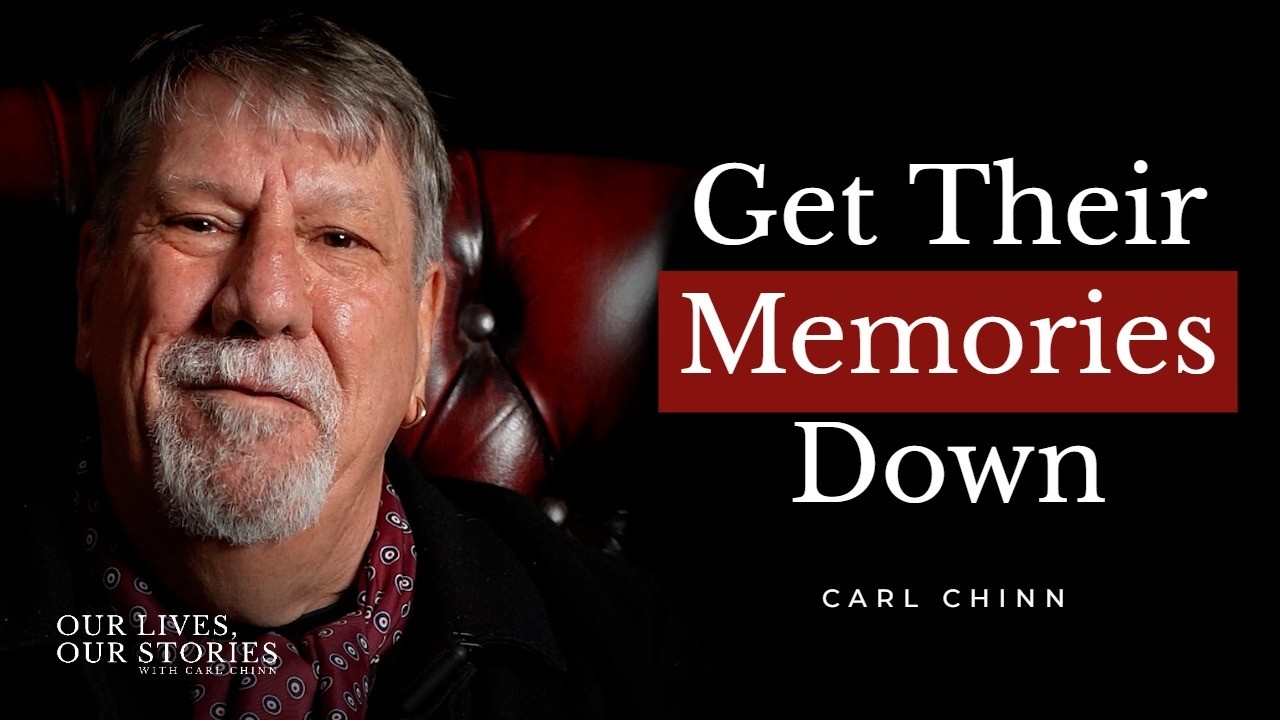
Professor Carl Chinn MBE is one of Birmingham's best known social historians, an author, broadcaster and public speaker who has spent over 40 years popularising the city's working class past. He lectured at the University of Birmingham from 1990, became Professor of Community History in 2002 and is now Emeritus Professor, and he has written more than twenty books on Birmingham and urban working class life. Before academia he followed his father and grandfather into bookmaking, and for years he presented a hugely popular weekly show on BBC WM.
In this episode
In this solo episode Carl answers a question he has fielded his whole life: what actually makes a historian? He goes back to the heroes who gripped him as a boy, Robin Hood and William Tell, King Arthur and Hereward the Wake, and the novels of Rosemary Sutcliff that pulled him into Roman Britain and the so-called Dark Ages. Reading them now, he can see how those stories of the underdog and the fight for independence quietly set the direction of his life's work.Find out more: Wikipedia Birmingham Books
Transcript
This transcript is auto-generated and may contain errors. Tap a timestamp to jump the video.
Hello there. I'm Carl Chinn and welcometo our lives, our stories. And in thisepisode, I'll be revealing more about mylife and my story. In particular, I'llbe delving into the influences in mychildhood and youth that made me ahistorian. If somebody had asked meprobably 30-odd years ago, when I was inmy late 20s and early 30s,what made you a historian? My answerwould have been pretty clear.Um I'm always said that from the momentI could open my mouth, I talked historyand I always read history books. Inparticular, I read historical novels.I've got a couple here with me that were
influential.This isn't quite a novel, this one. It'sthe stories of Robin Hood and I musthave bought this at a school fete orfair when I was 8, 9, 10 because it waspublished in 1912.And I was fascinated by Robin Hood as akid. And part of that fascination arosebecause Robin Hood was also on the TV.So, I was reading storiesat a very young age,8, 9,about Robin Hood, but he was also in aseries of children's TV programs. Wasn'tjust Robin Hood that was involved in TVprograms. There was the Swiss heroWilliam Tell. And the story was that
when the Swiss were fighting to be freeof the Habsburg Empire, William Tell wascaptured and he had to shoot a crossbowarrow through the appleon the head of his son, which he did andthen he led the resistance towards theHabsburgs, which ultimatelyled to the beginnings of Switzerland.So, there was Robin Hood, there wasWilliam Tell, there was King Arthur. Iwas fascinated by the stories of KingArthur and the Round Table.And that stayed with me for many years.It still is with me. I remember later onreading a book when I was in my teenageryears by T.H. White called The Once andFuture King. And going with our mom and
dad to seeuhthe King ArthurDisney filmat the pictures when we were very young.Robin Hood, William Tell, King Arthur,and another one who people have reallyalmost forgotten today was uh anAnglo-Saxon hero called Hereward theWake who continued to fight against KingWilliam the Conqueror, the Normans,after they'd won at the Battle ofHastings. And he was in the Isle of Ely,and he would hide there, and he wouldcome out and attack the Normans. So,there wasthese influences that were on me,looking at these heroic figures from the
past that actuallydeeply influenced my later approach tohistory. Robin Hood stole from the richto giveto the poor. Hereward the Wake fightingon even though his people had beendefeated. William Tell campaigning,struggling for his own people'sindependence. King Arthur, this heroicfigure who brought together his knightswho were chivalrous and looked afterpeople. Those were influencesthat probably at the time, no, certainlyat the time, I didn't realize. So, theyhad these books,and I was looking at TV programs onthose heroic figures. But from an early
age, I was also reading historicalnovels andan author who had a big influence on mewas Rosemary Sutcliff. This was thefirst novel of hers that I read. It wascalled The Eagle of the Ninth about alost Roman legion that went pastHadrian's Wall into the land of thePicts and disappeared, obviouslydefeated, andit grabbed hold of me. Her writing forchildren and young people wasoutstanding. It originally came out in1955.The edition I've got was from '63. So, Iwould have reckoned I'd have been eightor nineat the most when I first read that. Andthat drew me into books by RosemarySutcliff, many of which were about the
the fall of the Roman Empireand the so-called Dark Ages at the endof the Roman Empire when the Angles andthe Saxons and the Jutes came to makeAngle Land, England, and were fightingthe British, later called by the Englishthe Welsh. And there were Picts in thenorth and the Scotti had come over, theScots from Northern Ireland to settle inArgyllshire. I learned a lot of historyabout the so-called Dark Ages fromRosemary Sutcliff. And that tied in withmyI suppose it was a passionforthe Dark Ages, for King Arthur, andfinding out more about who this
man was. Was there really a King Arthur?Was he based on a real figure orfigures? And this this end of RomanBritain and the move intoearly medieval England, Scotland,Irelandand Wales. And from Rosemary Sutcliff'snovels, there were others that reallydrew me in.There was this man called Henry Treece.This book of his was on the Children'sCrusade sometime in the early 13thcentury. Two lots of leadersof children gathered them to try and goto what is now Israel stroke Palestineand recapture itfor the Christians.
Sadly,most of the children died or were soldinto slavery before they left Europe.What I found interesting about that bookwas that years later, I read more worksby Henry Treece, particularly his Vikingtrilogy that followed one Viking warriorand differentViking explorations and adventures basedon real Viking movements andexpeditions. And Henry Treece, manyyears later I found out,was born and bred in Wednesburyin the West Midlands, in the BlackCountry. He went to the local grammarschool. He went on to BirminghamUniversity.And I just find it really upsetting thatwe're not taught these things at school
about our region, about our history, andhow about how learning about our historywe can reach out to the histories ofother places and come back to ourselves.So, Henry Treece, his Viking trilogyespecially,grabbed hold of me. And then,my reading kind of spread out a littlebit more, well, not just a little bitmore, quite a lot more. This is a bookcalled The Standing Lions by MaryRenault, and it was about Mycenae inancient Greece about the time of theTrojan Wars. It was a fascinating readand it really drew me in. And anotherbook that I read that made me want tolearn more about the peoples of the
Caucasus was this book here. Uh let mehave to put my glasses on so I couldread it correctly. It's by B. BartosHopfer, Storm Over the Caucasus, and itwas about a man who was the leader ofthe people of Dagestan, a Muslim guycalled Imam Shamil, who led themto fight against the Russians who weretaking over all the littlenations of the Caucasus. So, reading wasdeeply influential. I learned lots fromthose books, reaching out fromheroic figures of England like RobinHood and Hereward the Wake,the Dark Ages, King Arthur, who would
have been a British leader, a Welshleader as we would later have calledthem, out towardsthe Children's Crusade and the Vikingsthrough Henry Treece, and across toSwitzerland through William Tell,and then to the Caucasus through anothernovel. And I was always keen to learnmore, not only about my own region, myown country,the British and Irish Isles, but alsoabout Europe and further and furtherafield. So, if you had said to me in mylate 20s and early 30s,"Whatmade you become a historian, Carl?" Iwould have said, "Reading historicalnovels, which led me to want to find out
more about the places that I was readingnovels, more about them really andhistorically." Particularly, I wouldfocus on the Encyclopedia Britannica.What a resource that was. And as a kid,I always dreamed of one day having afull set of the Encyclopedia Britannica.It never happened, but it was a biginfluence on me. And the the writings inthe Encyclopedia Britannica were deeplyeffective on me becoming a historian.But really, when I look back, thereasonsthat I became a historian,the things that made me a historian,were family stories. Both sides of my
family, mom's family,the Woods, that was my mom's mom's name,and they lived in Whitehall Street,Aston. My mom's dad, my granddad Perry,who came from Higgs Street,Highgate. My dad's family, the Chinns,who were tied into Studley Street andAlfred Street off the lane, the LadyPool Road in Sparkbrook. They were allstorytellers.And in my mind's eye,on a Sunday afternoon,it kind ofconflates into one Sunday afternoon withall of them there. Now, they weren't allthere at one time, but especially when Iwas very young, 8 9 10, I rememberSunday afternoons
vividly.Because there'd always be mom and dadthere.There would be always our nan, LilyPerry nee Wood.There'd be my granddad Perry, ArthurPerry. Granddad Perry couldn'twalk. He was struck down with multiplesclerosis, MS.In the early 1950s, he managed to walkmom down the aisle when she wed dad in1954.But by the time I come along, granddadcouldn't walk and he couldn't use hisright arm, but his left arm was reallystrong. And I remember deeplyon one occasion mom and dadtook granddad
toa revival revivalist meeting, somethinglike Billy Grahamwas the big one from America and and itwasn't his one, but it was somethinglike that where they went, I think, overto Summerfield Park on the borders ofWindmill Green just off Dudley Road byRotten Park.Andthere was the laying on of hands andpeople would walk away, hopefully. Iremember sitting on the staircasepraying,praying, prayingthat our granddad would come backwalking.But unfortunately, he didn't. But he hada big influence on me, our granddad. Hewas a big blues fan, and all our family,mom coming from Aston, were was Villa.
Dad from Sparkbrook, without was mainlya blues area. There were lots of Villafans there, and dad and his brotherRonnie were Villa. His other brotherWally was blues. And mom used to playour granddad up about being a blues fan.And when it was his birthday, she'd dohim a cake in claret and blue instead ofblue and white for a Birmingham Cityfan.And he never swore, our granddad,although he must have been really upsetwith his life.And he never swore, but he'd look atthis cake that our mom and dad made forhim, and he'd go, "God bless me, mywench.You've done it again."And he'd have a little grin on his face,and it was a joke between him and ourmom. "God bless me. God bless me."
"My wench." Now, outsiders and youngerpeople might think that's a term ofinsult. To older Brummies and BlackCountry folk, people from the Forest ofDean, the Potteries, wench isn't aninsulting term. It's a term ofaffection. It's from a Middle Englishword for a a young woman. Andolder Brummies, Black Country, etc.,would use the term as a term ofaffection.For example, our nan, my granddad'swife, my nan, Lily Perry, Lily Wood asshe was, was our wench. She was theoldest daughter of 12 and never had achildhood.They had to mind the babies. She told meshe used to go out as a youngsterherself
with a baby on each hip, pushing asecond or third auntpram or pushchair, whatever the familycould get. And she had to virtuallyleave school at 12 to mind the babiescuz great granddad Wood was out of work,traipsing in streets were looking forwork in the late 1920s.Granny Wood, his wife,wastaking in washing for the better off,going out charring, cleaning the housesof the better off. And over night time Iwas grafting in the canteen at theHercules, a big bicycle factory in RockyLane, Aston. So our nan grew up as ourwench, the big sister who was a littlemother to all the others. And nan andgranddad were very important
to me growing up. And granddad wasn'tsupposed to have a drinkbecause he was sobadly affected by the MS. But our dadsaid, "Well, it's not going to make anydifference now." And he loved a tot ofscotch.And nan couldn'tlook after granddad at home because shewas still working. And they lived in aback-to-back house. And so granddad wasat Summerfield for a long time and atQuinton Hall and elsewhere. But everySunday without fail,dad and me and our kid would go to fetchgranddad.And those Sunday afternoons he'd go,"I wouldn't mind a tot of scotch, Alf."to our dad. But although dad's nicknamewas Buck,
people that knew dad through mom calledhim Alf, especially her family cuzthat's how she introduced him to dad.And he'd go, "I'll get you some scotch."And he'd have a tot of scotch. And aftera couple of tots of scotch, he'd look atour mom and he'd go, "Come here, mywench." And mom go, "What's that, dad?"He'd go,"I'm clammed." And I think back nowand those words were so so powerfulbecause they imbued me with a loveof our dialect, which is dying out.Clammed,the old West Midland wordfor hungry. And I learned a lot fromgranddad. Andhe used to call me over and go,"Come here, my lad."
"What's that, granddad?" "Don't youforget."you're related to the Tipton Slasher.Now, this is wasn't something I wentaround bragging about at the age of 8 or9 or 10because we hadn't got a clue coming fromSouth Birmingham where Tipton was, butI'd heard of Jack the Ripper, so I hadthis nightmarish vision of some distantrelation of ourscalled the Tipton Slasher going aroundslashing people'sthroats in a place called Tipton.But, not long before granddad died, Iwas in the old Hudson's bookshop and foryoungstersyou'll have to bear with me here becausewe only had two bookshops in Birminghamin
20th century Birmingham, marchingforwards towards the 21st century, wehad two bookshops. There was the MidlandEducational which we only went to reallyfor school books and it had an escalatorand was only two other escalators inBirmingham. There was one at Lewis's, anold-fashioned one, my kind of creakingwooden escalator and a modern one at theBull Ring shopping center. And the otherbookshop was Hudson's and it was amagical place. And you'd go intoHudson's at street level in New Streetand there'd be a little room and there'dbe a room behind it, there'd be somestairs down below and you go downstairsinto another room and it's like you'regoing underneath Birmingham. I oftenwondered did Tolkien go into Hudson's
bookshop and get his idea of the hobbitsfrom going downstairs into Hudson'sbookshop. And this book jumped out. Itwas the last Christmas granddad wasalive.The Tipton Slasher.And I think it was the first book or oneof the first books that was brought outby the Black Country Society and it wascalled His Life and Times by Mr. TomLangley, five shillings, look at that.So, it's before decimalization. Fivebob, 25 p. What's to come out in 1771,and I'd have been about 14when I bought this book.AndI couldn't believe it seeing this bookon the bookshelf at Hudson's.
It was about a man calledWilliam Perry, Bill Perry.He was called the Tipton Slasher becausehe was a bare-fisted champion boxer ofEngland, and he slashed with his righthook. He came from Tipton. His name wasPerry. My granddad's name was ArthurPerry. His dad's name was Thomas Perry,but his granddad, whom he never knew,was a William Perry, and had been bornin Dudley. And granddad always told usthat his granddad was related veryclosely to the Tipton Slasher.Well,the book was given to granddad, and Ithink it was his last Christmas.It must have been. And again, he didn't
swear, but when we kept onreading the stories to him about theTipton Slasher, he went, "God bless me.I told you I was right. I told you wewere descended from him." Many yearslater, as a historian, I decided tofind out whether we were descended fromthe Tipton Slasher. And he had no directmale descendants, but there were lots ofPerrys in the Black Country. The TiptonSlasher himself is buried at Kate's Hillat St. John's churchyardin Dudley. And there was lots of Perrysin and around Dudley, including mygranddad's ancestors, my own ancestors.And it looks like that every Perry thathad a son around the time that BillPerry, the Tipton Slasher, was the
bare-fisted boxing champion of England,it looks like all of them named theirfirst son William. So, we're notdescended from the Tipton Slasher, butgranddad would have been right. In someway, we would have been related asdistant cousins. So, that was a bookthat tied in with the influences of myfamily stories.And this is another one. You canprobably not even see the title here.Look,the coveringshave come away because it's been read somuch. But, I'll show you what's insidethe book.It's a historyof Queen Victoria's reign, QueenVictoria and her people by the ReverendC. Hall, and this came out to celebratethe Diamond Jubilee
of Queen Victoria in 1897.And on the inside, it's gotAlfred Chinn,June the 22nd, 1897.Later on, it's got my granddad Chinn'swriting again, June the 22nd, 1897,Clifton Road School.A present to Carl Chinn, 14th of the8th, 14th of August, 1963.I was 7.Granddad must have known about mykeenness, my interest in history.And he left me a little note. He said,"This book and Coronation Medal, whichsomehow disappeared,were given to me when I was about 6 and1/2 years old from Clifton Road School.
The photo is of my mother, who was oneof the first pupils at the school. Ihave the photo.Previously, she went to a private schooland paid 7s 6d a week. When Clifton Roadwas built, she then went there. Theschoolmistress was Miss Grace, who Ithink was the first headmistress there."That's from my granddad.And he gave it mebefore I was 8. I was 8 in theSeptember. Granddad diedin 1965.And I remember clearlysitting on his lap. Dad would often takemedown to granddad's house at 19 AlfredStreet, Sparkbrook, when he was going towork in the betting shops. And I'd onlybeen four or five, so it'd be before I
went to school. And I remember Granddadlived opposite the betting shopon the corner of Queen Street and AlfredStreet. Dad had opened it up with myUncle Wallace in illegal betting shop.So, this is just before the legalizationof cash betting away from the racecourse in 1961. And it's before I wentto school, so it'd be about 1960.Sitting on Granddad's lap, and he he'dtell me stories. I can't remember manyof them. I was too young. But it was anOld Contemptible like Granddad.Now, again, many people today don't knowwhat an Old Contemptible is. And inBirmingham, there's a pub called The OldContemptibles. The reason being that TheOld Contemptibles branch from Birmingham
met there. So, who were The OldContemptibles? Well, when the BritishExpeditionary Force was sent over tosupport the French after the Germans andthe French went to war in 1914, theGermans broke the neutrality of Belgium,which the United Kingdom had pledged torespect and uphold after the NapoleonicWars when Belgium was created.And the British Expeditionary Force gotover there quickly and reached Mons, buthad to retreat from Mons. But when theyreached Ypres, known to the Tommies asWipers, they held the line. And weresupported soon after by men from theIndian Army, Sikhs, Hindus, and Muslims,
by men from the West Indies andelsewhere.And the Kaiser ordered his generals,when he'd heard of the BritishExpeditionary Force reaching Flanders,Northern France, the borders of NorthernFrance into Belgium, he ordered them tosweep that contemptible little army intothe sea. And that contemptible littlearmy held the might of the German army,outnumbered, but they held them. Andafter the war, the survivors took thatname of contempt and turned it into aname of pride. The old contemptibles.My granddad was one of the oldcontemptibles. He was in the secondbattalion Coldstream Guards that foughtat
Ypres.And he was wounded in February 1915 atLa Bassée. And eventually invalidatedout of the army. And other things Iremember at the age of four or five,older cousins at Tony, Chin,my cousins Richard and Paul and Johnny.Must have been in the school holidayscoming into granddad's house into thefront roomup the step into Alfred Street and beingsent with themtoBurden's ice cream. Mr. Burden, I laterinterviewed him many years later. Andhe'd married an Italian woman, a BrummieItalian. And her family had given her
recipe for Italian ice cream and it wasdelicious. It was yellow. It's likecustard. It was the best ice cream inthe world. And on her other well, otheroccasions, I think that's where I musthave got my love ofmild beer from. Was granddad have a jugof ale. He'd let me have a sip of hisbeer whilst I was there. So, granddaddied when I was probably too young totake any stories, but I was lucky thathis younger brother, my great uncleBill, born in 1893,and my great uncle Wal, who was born in1897, were alive and when I firststarted talking about writing down thehistory of the lane, the Lady Pool Road,and I I interviewed both of them and
they told me many stories of the laneand its district when it was still onthe edge of Birmingham when their fatherand mother had moved there in the 1870s.Excuse me for interrupting theconversation, but I just wanted to getacross how important it is that everyonetells their story because everyone has alife and everyone has stories to tell.Now, you can do this in different ways.You can use your mobile phone, you canget somebody writing down the memories,you can get a collage of photographswith stories around them. Or else, ifyou're struggling to get started, wehave a free guide on our website andI've also brought out this book, MyLife, My Story, a Guided Legacy Journal.
There's an introduction by me, there'squestions and writing prompts for you tothink about that can move that storyforward and get those memories down.So, I grew up with these storieslistening toGrandad Perry, especially, GrandadCheyne, but there were other storiesthat really grabbed hold of me. On aSunday afternoon, our Nan, Lil Perry,nee Wood, and her sister, my great auntWinnie, who was always Aunt Winnie tous, who was much younger than Nan,Winnie Martin, nee Wood, would sittogetherand in those days, that's how momspeople were still smoking in the houseand there was a
a fog of Park Drive smoke everywheretill they went on to number six.And they'd be chatting away constantlyas they told us about the old end. Andthe old end was Aston Cross, White HouseStreet, Aston.I remember Nan telling me stories aboutGranny Woodhaving to make a stew with potvegetables,potatoes, swedes, parsnips, turnips,anything that was cheap with baconbones, with scraggly bits of meat on,and Oxo,and making a stew with that.And that how she'd have to try and feedthe family. She had 12 children.And her husband looking for work, and
she was grafting as I've mentioned.And she'd make up a dinner.And they'd try and fill their bellieswith the pot stew.And pieces of bread.And then said.She says, Carl, I've seen that woman.I've seen her.Watch everybody else eat and I've ateand I've stayed behind to help her clearup as the babies went out to play.And the old man, well, they didn't sayold man, they'd say the old man.Will go out traipsing the streetslooking for work.And I've seen our mom.Nothing left. Nothing left. She cookedit over black ladies range. It's allbeen eaten. And they'd take a stale
piece of bread and they'd pour theleavings of the teapot over the breadand mash up that stale piece of breadand eat it. That was her dinner. Andmany, many years later I give a talkover at Essington. I think it was in theMethodist church.And I told that story. But a womanstarted to blurt.I was crying.And I come off the lectern.And I walked down to her andI hugged her. She says, Carl, I've seenmy mother.Do that.Pour the leavings of the teapot.Over a piece of stale bread.Sop it was called.One of the richest nations in the world.And so many poor folk had so little.
And many years later that influenced mein writing a book called poverty.Amidst prosperity.And the hardships of the strong womenI'd heard about growing up. They led tomy first book. They worked all theirlives and I got that title.From an old bloke I interviewed. I uswhat did your mother do?And he looked at me, He "Carl,a poorer wench worked from the moment Icould walkto the moment I ceased to be able towalk." And it was so true.A poorer mother, a poorer woman, neverhad a day off. Men had days off.They might have had a bit of backacheand a couple of three pints down the pub
or else they went out for a walk.A poorer woman they might have had a bitof snuff.If they was lucky, they might get acouple of sticks of ale in a jug, thirdof a pint,from the outdoor,and put the hot poker from the blackleaded range into the jug to liven upthe ale. That's as much as they had.Women worked all their lives.And we owe a debt ofdutyto remember their sacrifices, theirhardships.I owe much to the strong women in myfamily, our mom,our nan.My great grandmother Wood, granny Wood,and my great grandmother Cheyne. And nanwould tell me lots of stories.
She spoke in the old Birmingham, the oldBrummagem dialect.And he'd use words like "I feared." "Andmy legs are wailing me.""And have no cutter with them, Carl.I've nothing to do with them."If I'd fell out with somebodyat school. And auntie Win was a greatstoryteller as well. And often ourWinnie's storytellingwas tied in to Irish songs and oldsongs, but particularly Irish songsbecause their mom, my great granny Wood,was born on the Curragh Campin the County Kildare, the daughter of aBritish soldier, my great granddadKendall, great great granddad Kendall,and an Irish colleen who we thought wascalled Clancy. And many years later I
did research and I found out her namewas, according to the documents,Cremley, and she was from Ratangan,near the Curragh Camp, and she must haveworked at the Curragh Camp. The localpeople in Ratangan told me that the theIrish young women that worked at theCurragh Camp were called Rens becausethey lived in the furs that outside thecamp.Outside the barracks.AndRatangan's justcouple of 3 miles away from the CurraghCamp, and she must have gone there towork and met my great great granddad,and we thought her name was Clancy. Itwasn't. I then thought it was Cremleyfrom the documents, but the peoplerecently in Ratangan told me her namewould have been Cronley.
And there are still Cronleys in Ratanganand thereabouts.So, Nan would tell me about hergrandmother,who we thought was Granny Clancy, andhow she met Granddad Kendall, and hadGranny Wood and Uncle Harry. Then, thenhe came back to Worcester.And thathis old girlfriend, who'd married whileshe was away at the Curragh for 7 or 8years, had become a widow and threw acap at him.And Nan said that he left his Irish wifeand went off with his old fiance, andthat Granny Clancy would go around thepubs where they were drinking and smashthe windows. And I found newspaperreports about her smashing up windows.
And that poor womanabandoned,died in the workhousein Worcester.And our Nan said to me the only reasonthat Granny Wood knew she diedwas because she received a telegram.Began, she get this telegram,"Me and your father, the bellswill be ringing for you." Granny Woodhad to leave home at 16 and didn't seeher mom again, and she died a few yearslater in the workhouse. So, theworkhouseIt a hated institution.In the early 19th century,there was a system called the parishwhereby each parish had to levy a rateon the property owners to help outpoorer people. And they might give them
tokens to get a loaf of bread or somecokeor wood for fuel. But the rich believedthat the poorneeded to be punished for their poverty.And so they didn't want them to ask forhelp from the parish. They would say,"Right, we're going to stop people, theable-bodied poor, the scroungers, asthey called them,from asking for help.We're going to make each parish or aunion of parishes build a workhouse, aprison-like structure. And there anybodythat asked for help would have to gointo the workhouse. And husbands wouldbe separated from their wives, andmothers from their daughters, andfathers from their sons.
And they would be stripped.And they would be bathed.And they would be put them into uniform.And the men would go and have to breakstonesand pick oakum, big thick pieces of ropeused in the navy with tar on them, andunpick them. And the women would have towork in laundries, and the young wencheswould have toclean the staircases, and the lads wouldbe forced to work as well.And it was supposed to put off theable-bodied poorfor asking for help. But when thesehated prisons, bastilles they werecalled by the English working class,because just like the bastillesymbolized the oppression of the French
people, so too did the workhousessymbolize the oppression of our people.And they were hated.And the entry into themwas an archway.And Birmingham's workhouse was the oldSummerfield site in Winson Green.And they called it the Archway of Tearsbecause they might as well put up on thewall outside abandon hope.All ye who enter here.But they soon found out the richthat the poor who asked for help werenot the able-bodied poor, were notscroungers.It was the elderly who could no longerlook after themselves and who couldn'tbe looked after by their poor relatives.It was the abandoned wife with babies.
It was the single mom shunned by all.It was the disabled, the physically, thementally ill. It was the injured. It wasthe forlorn. It was the people who wereabandoned.And eventually out of the workhouse theyhad to startbuilding infirmaries. And from theinfirmaries something so good emerged,the NHS. Why? Because the workhousesystem failed.It had to not put off the able-bodiedpoor from applying for help. It had tostart to realize it had to providefacilities for the ill, the infirm, theelderly, the young, schools,hospitals, lots of things that we take
for granted today. We can see emergingin the hated workhouse system, inparticular, our beloved NHS.And poor Granny Clancy, her real name,Lillian Cronley.I'm proud to be descended from her.She diedin the workhouse in Worcester.I have other relativeson the Derrick side of my dad's mother'sfamily who died in the workhouse atDudley Road.And when my granddad Perry was very ill,one of my earliest memorieswas going to see him at the SummerfieldRoad site, which had been the infirmaryfor the workhouse. And the Archway was
still there.I know I was only eight or nine andgranddad was seriously ill and Iremember him saying to our mom,"My wench,you've got to get me out of here.I've fetched being here to die."Mom tried to reassure granddad, but hehadn't lost his dignity.But he hadn't lost his pride.But it was a hospital, but for people ofmy granddad's generation born in 1906,it was still a fearsome place.Those stories areetched into my soul.Stories of poor peoplewho wereexcluded from society, not just
marginalized, pushed outas if they were rubbish. But you knowwhat the term they used for thosepeople?The poor, they called them the sunkensix or the residuum.The rubbish left over.Sad people.I'm lucky.I never experienced poverty. I grew upwell off, the son of a bookie. I'm thefirst one to go past 15 at school.But I heard those stories growing up.I'm one generation removedfrom those hardships. And one of thethingsthat really angers me todayis the way the poor is still decried anddenigrated. What we see today
is the gapbetween the life expectancies,the life hopes,the life opportunitiesof poorer kidscompared to those from wealthierbackgrounds is as wide today as it wasin the Victorian and Edwardian periods.And I feel ashamed as a British citizenthat that gap is as wide and that thatmust still fight to break downthat great door of poverty to open upopportunities for all.I valueall those storiesbecause they taught me
whom I owe my loyalty to.And it's the forgotten,the forlorn. It's those who are pushedout of society. And the reason I havethat loyalty to themare the stories that were told to meby my granddad Chinn,my granddad Perry,my auntie Winn,and our nan.On another occasion, I'll tell you thestories that made me a historian, thestories of our mumand our dadand other membersof our family. And what I want to finishoff with telling you is this,those stories are still there.For you youngsters, grab a hold of theoldest people in your family, get their
memories down.You've got your phones now, you canrecord them easily.Don't let them die with those memoriesbecause for those of us, I'm 70 thisyear,those of my generation and older, we'rethe last.We're the last that can can tell youwhy the NHS is so valued by us.We're the last that can tell you why theworkhouse system was hated.We're the last that can tell you thestories of who we areand where we come from.